


 Favourites
 Customer portal


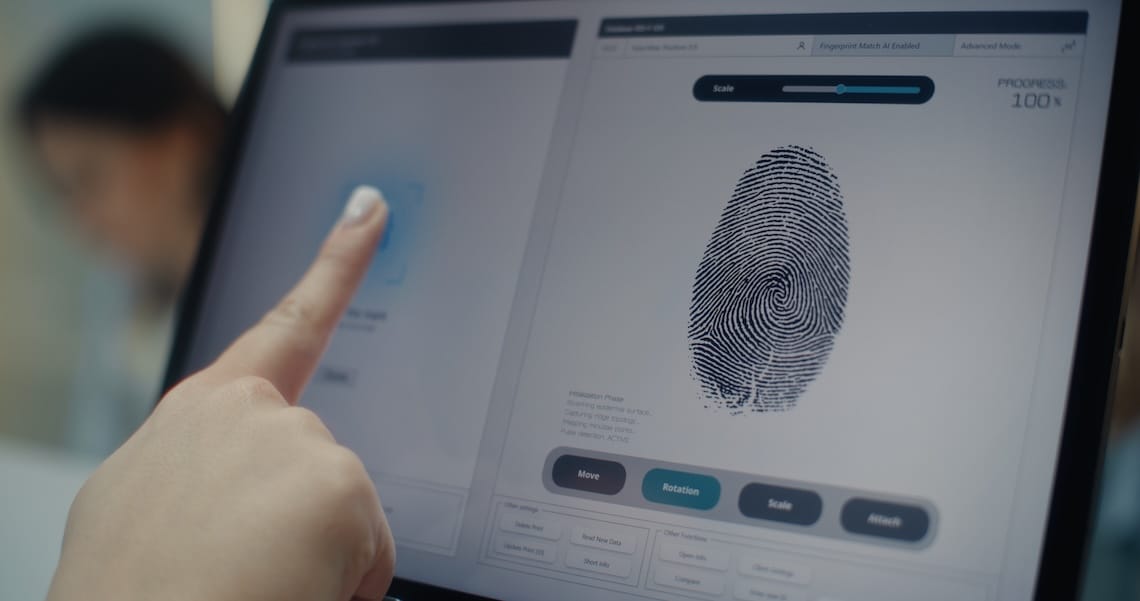
On 12 October 2025, the European Union (EU) introduced an important change for non-EU nationals travelling in Europe: the new EU Entry/Exit System (EES). It will be phased in, with full implementation by 10 April 2026.
The EES replaces the physical stamping of passports at border crossings by recording your biometric information, including your face and fingerprints, each time you enter or exit the Schengen Area. The aim is to make border checks more accurate and efficient for travellers.
How does the EES work?
The process for your first entry into an EES country is the most significant change. Instead of a passport stamp, your details will be registered electronically.
First entry:
- You will be directed to an automated EES kiosk or a border official.
- You will scan your passport or travel document.
- The system captures your biometric data, including a facial image and four fingerprints.
- A border guard may ask some brief questions about your trip.
Subsequent trips:
Future trips should be faster as your biometric data will already be in the system.
You will only need to scan your passport and have your facial image or fingerprints verified.
Important Note: The EES will work alongside the upcoming European Travel Information and Authorisation System (ETIAS), which is a separate pre-travel authorisation for visa-exempt travellers.
How is the EES being phased in?
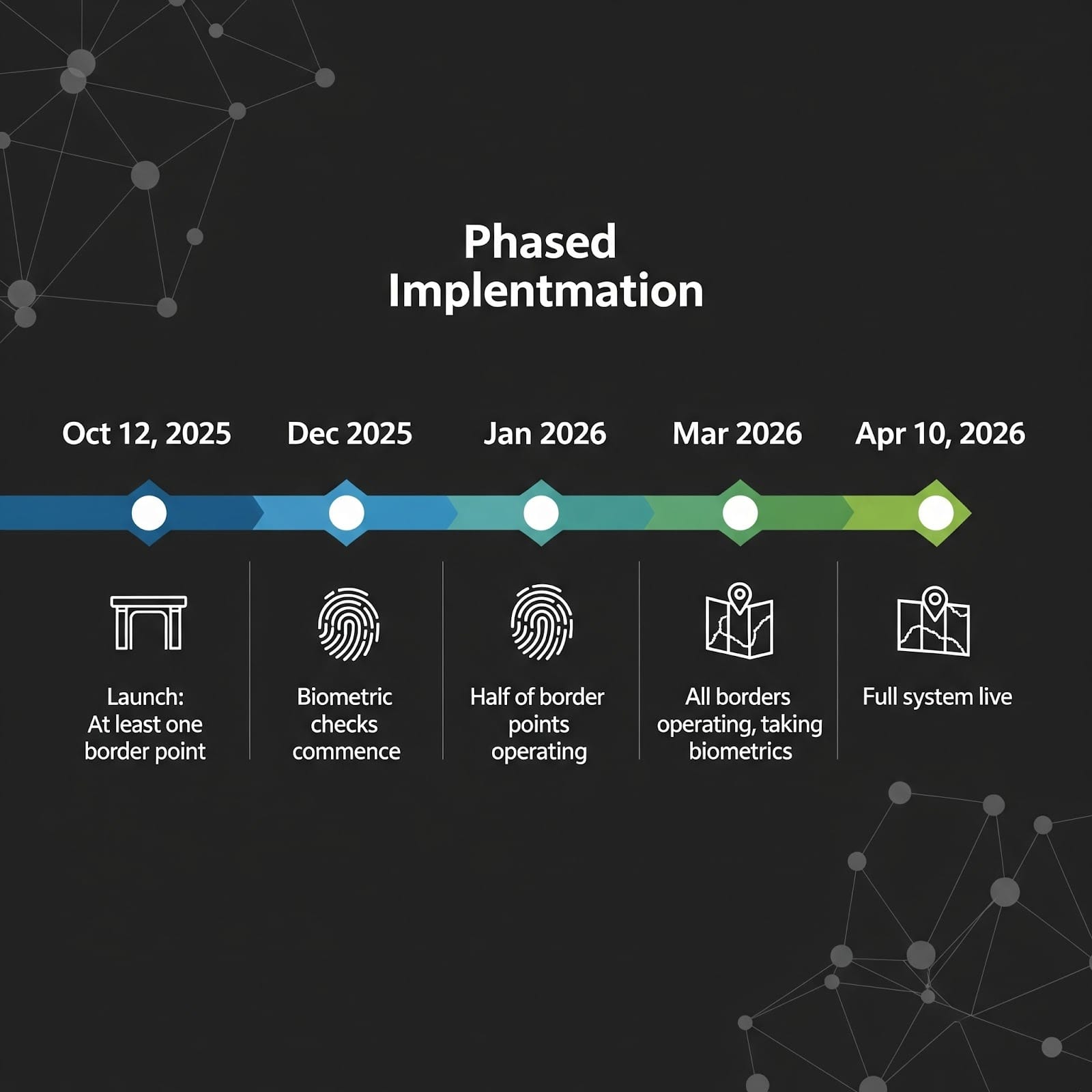
Here's the timeline for the EES rollout:
- 12 October launch: At least one border point in each country should operate the new system, increasing to 10% of border points after the first 60 days.
- December 2025: Borders operating EES start to take biometric checks (facial scan and/or fingerprints).
- January 2026: Half of border points should be operating EES, with at least a third of passengers going through the system.
- March 2026: All borders are operating EES and taking biometrics, processing at least half of passengers through the system.
- 10 April 2026: System fully live, with all borders processing all passengers through EES, and taking biometrics.
Travelling to Europe from London St Pancras
In most cases, the EES checks will take place in Europe – when you arrive at your destination airport or port, and when you leave at the end of your trip.
However, if you are departing via the international train from the UK (London St Pancras), these checks will happen when you go through passport control in the UK.
This is because there is a dual border – both British and French – at these locations.
However, you won’t need to do these checks again when you arrive on the other side.
FAQs
Why has the EES been introduced?
The EES has been introduced to:
- Modernise border management.
- Increase the efficiency of border checks.
- Prevent irregular migration and detect 'overstayers' (travellers who have exceeded the maximum duration of their authorised stay).
- Enhance security by combating identity and document fraud.
- Help in the fight against serious crime and terrorism by providing authorities with access to traveler information.
When will the EES be implemented?
The EES rollout started on October 12, 2025. It will be phased in across all border crossing points in participating countries, with full implementation expected by April 10, 2026.
Which countries are part of the EES?
Once it's fully implemented, the EES will cover 29 European countries. This includes all EU Member States except for Cyprus and Ireland, as well as the non-EU Schengen countries: Iceland, Liechtenstein, Norway, and Switzerland.
The countries are: Austria, Belgium, Bulgaria, Croatia, Czechia, Denmark, Estonia, Finland, France, Germany, Greece, Hungary, Iceland, Italy, Latvia, Liechtenstein, Lithuania, Luxembourg, Malta, Netherlands, Norway, Poland, Portugal, Romania, Slovakia, Slovenia, Spain, Sweden, and Switzerland.
Who does the EES apply to?
The EES applies to all non-EU nationals, including those from the UK, who are traveling to the participating countries for a short stay (90 days in any 180-day period), regardless of whether they need a visa or are visa-exempt.
There are some exemptions, including:
- Citizens of EU countries, Iceland, Liechtenstein, Norway, and Switzerland.
- Non-EU nationals who hold a residence card or permit for an EU country.
- Nationals of Andorra, Monaco, and San Marino, and holders of a passport from the Vatican City State or the Holy See. Individuals with a long-stay visa for an EU country.
What information will be collected and stored?
The EES collects and records:
- Personal data from your travel document (full name, date of birth, nationality, etc.).
- Date, time, and place of entry and exit.
- Biometric data (facial image and fingerprints).
- Information on any refusal of entry.
- This information is securely stored for three years.
Do children need to be registered with EES?
Yes, the EES applies to all non-EU nationals, including children. However, children under the age of 12 are not required to provide fingerprints, but their facial image will still be captured.
Do I need a biometric passport to use the EES?
In principle, both biometric and non-biometric passports are accepted at border crossings. However, you need a biometric passport to use the faster, automated self-service systems (e-gates) where available.
Will I be refused entry if I refuse to provide my biometric data?
Yes. If you refuse to provide your biometric data, you will be denied entry into the EES countries.
Will the EES affect the 90/180-day rule?
No, the EES does not change the rule, but it will make it easier to track and enforce. The system electronically monitors your stay, automatically calculating the remaining duration of your authorised visit. An online 'Web Service' tool will also be made available for travellers to check their remaining stay.