


 Favourites
 Customer portal


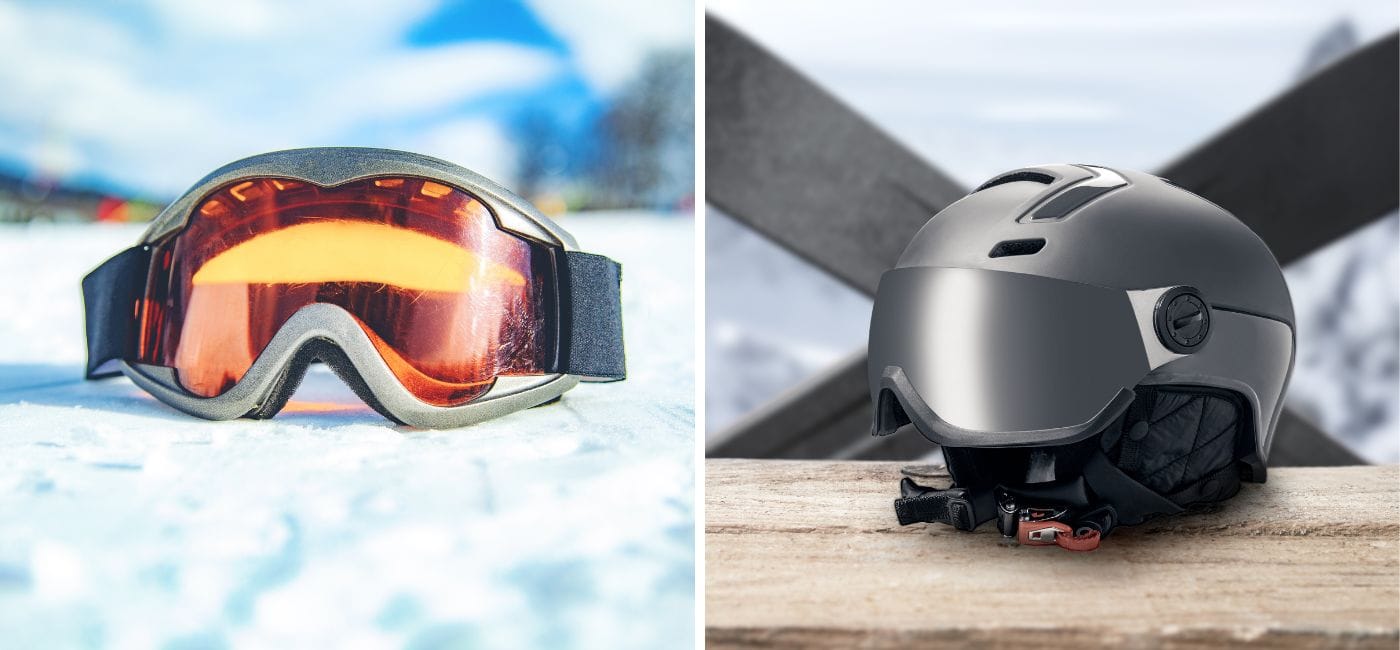
When it comes to eye protection and vision on the slopes, goggles have traditionally been the item of choice.
But in recent years, the number of people searching for helmets with visors has been on the increase, with Google trends reporting a 30% rise in interest around ski helmets with visors between January 2023 and January 2024.
So with the popularity of helmets with visors on the up, which type of eye protection is best? Well, ultimately, it comes down to personal taste.
If you’re looking for…
Wider, uninterrupted vision…
With skiers and snowboarders whizzing past, it’s important to have a good awareness of what’s around you on the mountain.
Both helmets with visors and unframed goggles are good choices if you’re looking for all-round visibility. However, for maximum visibility, the ski helmet with a visor comes out slightly on top.
This is because visors completely curve around the front of the helmet, keeping even the furthest of your peripheral vision free from obstruction.
Lens fog protection
Fogging usually happens when you wear your buff over your mouth and nose, funneling your warm breath onto the goggle or visor lens.
Helmets with visors are good in this situation as the gap between the visor and your face allows for the warm air to dissipate and clear quickly.
You’ll find that goggles with decent ventilation are also good at clearing any fog quickly but you may find it lingers a tad longer when you choose a cheaper or non branded pair of goggles where the ventilation technology isn’t so advanced.
Protection from the sun and mountain conditions
Mountain conditions can be harsh - wind, snow, and strong UV rays all play a part in a typical ski holiday, and both helmets with visors and goggles do a great job of protecting your face against these conditions.
A helmet with visor offers full face protection in snowy and sunny weather, however, may be less effective against strong winds, due to the air getting through the small gap between your face and the visor.
Depending on the style of helmet you wear, there can be a gap between your goggle frame and the front tip of your helmet, leaving a slither of skin on your forehead exposed to the elements.
Ease of changing lens to adapt to conditions
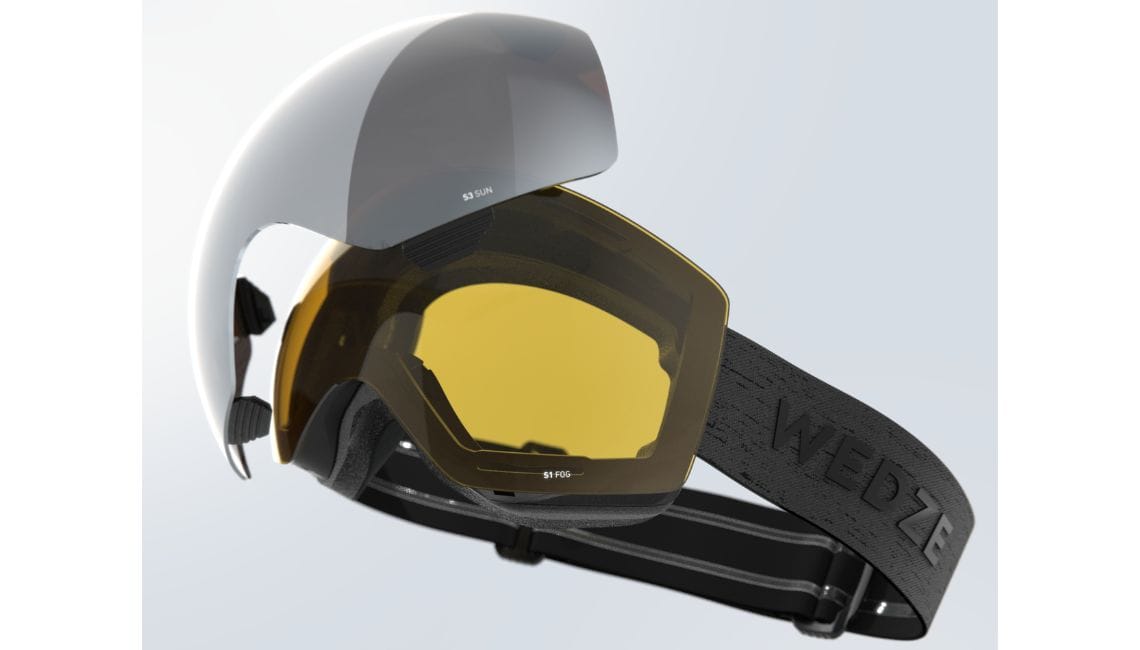
Both goggle and visor lenses are interchangeable, too, meaning you can choose a different type of lens for the level of light - bright, flat, or low visibility.
In fact, many modern visors and goggles will come with a lens that can be essentially stuck on top of the base lens, meaning you can change in a matter of seconds.
For older style goggles and visors where you need to change the whole lens, it can be quite fiddly, however it is worth it to ensure your eyes are appropriately protected in bright sunlight and you can see the definition in the snow in flat light.
Decathlon’s all-weather ski and snowboard mask goggles come with interchangeable lenses which are great for terrain visibility in any conditions, and ergonomic foam to mould around your face shape for extra comfort. They are also compatible with glasses up to 145mm in width.
Comfort
People who wear ski visors often say they’re more comfortable to wear over longer periods, because they don’t press against your face.
That being said, newer goggles have a soft cushion, meaning goggles aren’t necessarily uncomfortable, but you may find that they leave a slight indent where the frames have sat secure to your skin.
You’ll also find that goggles are easier to adjust if they’re feeling a bit too tight or loose, thanks to the straps they have either side that you can tug or release to your liking.
On the other hand, ski visors are permanently attached to your helmet and can’t be tightened or loosened, so you’ll need to make sure that you’re happy with the fit when you buy.
The best ski eyewear for glasses wearers
Not everyone gets on with contact lenses, particularly in the mountains where the air can make eyes feel dry.
You can purchase both goggles and helmets with visors that accommodate glasses underneath - these are called OTG (over the glasses) eyewear, however visors may be more comfortable, just as there’s a little more space for your glasses to fit.
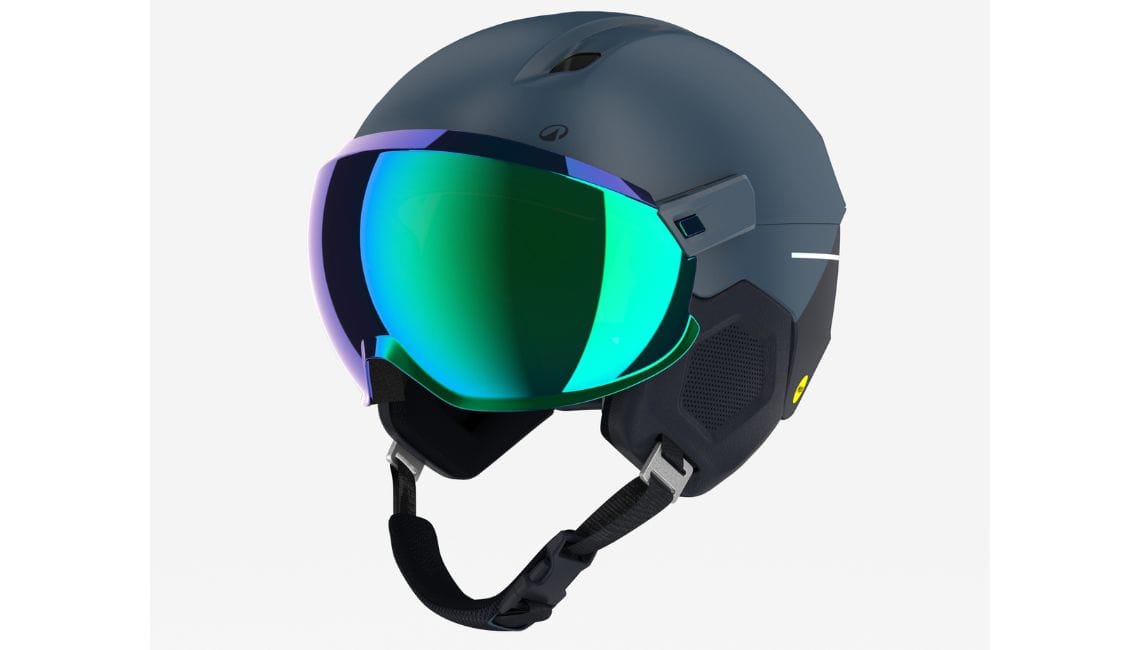
Have a look at Decathlon’s helmet with visor, which has an HD visor, adjustable ventilation and a state-of-the-art “Multi-Directional Impact Protection System” to really look after your head. It is also compatible with glasses underneath.
Eyewear that you won’t lose!
If you’re very anxious about misplacing your eye protection, then choose a helmet with visor attached - it won’t go anywhere as the visor is essentially screwed in.
That being said, it’s also quite hard to lose your goggles. This is because they’re clipped into your helmet via a button or toggle at the back, so as long as you don’t unclip them when you put your helmet down at the start of an après session, they should still be there when you’re done dancing.
Cost-effective ski eyewear
The cost of ski eyewear entirely depends on the quality and technology of the product. While goggles as a single unit are cheaper, a helmet with visor includes two items in one, meaning you may get more for your money.
It’s best to compare the quality and technology of a pair of ski goggles versus the quality and technology of both the helmet and the visor to ensure you choose the best option for your money.
In conclusion
When it comes to helmets with visors versus goggles, it really comes down to personal preference - both have their pros and cons - and both offer excellent protection against the elements on the mountain.
The best thing to do is to head to a shop like Decathlon where you can try on helmets with visors and lots of different types of goggles, so you can really find the best option for you - and remember to take your glasses with you if you’re looking for OTG!