


 Favourites
 Customer portal


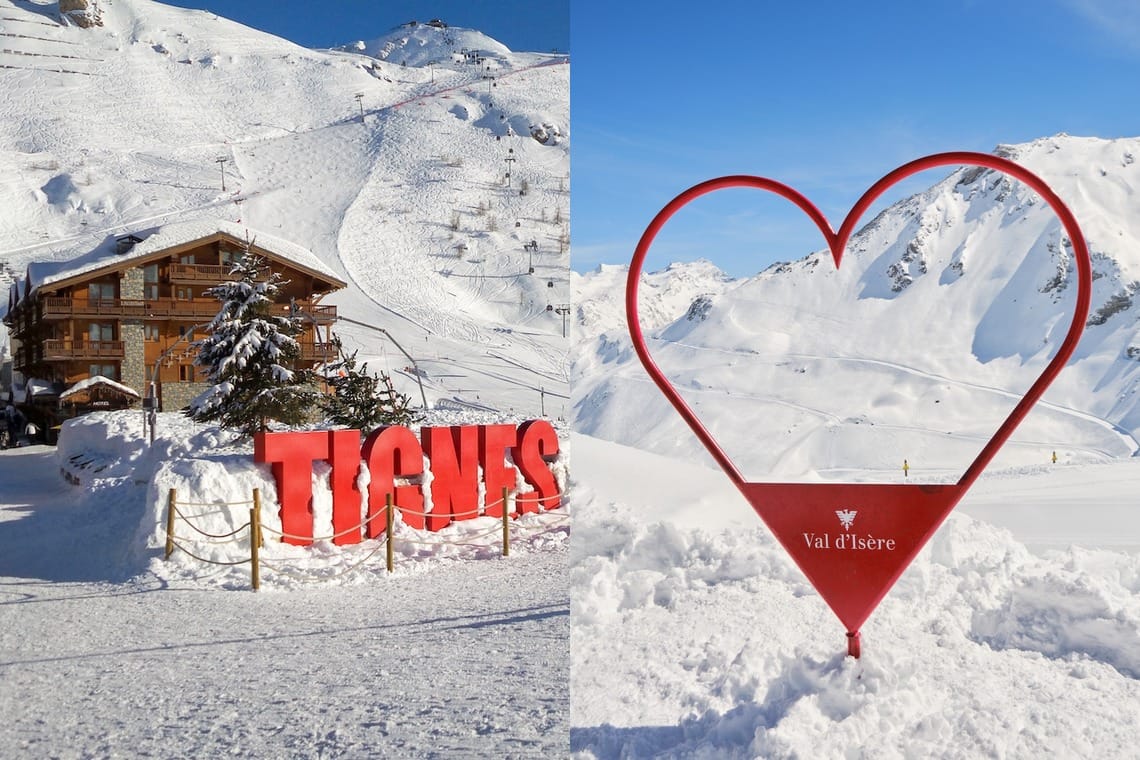
Tignes and Val d’Isère are consistently among the most popular resorts for British skiers. We can see that in our own data, with the resorts taking second and third place respectively in our most searched holiday destinations over the last year.
They share the same 300km ski area, so you’ll have access to the same pistes whichever resort you choose. But which is the best base for you?
The important differences are found away from the slopes: Tignes generally offers better-value accommodation and more ski-in-ski-out convenience, while Val d’Isère has a more attractive centre, a stronger restaurant scene and livelier après-ski.
Here’s how the two resorts compare for beginners, experienced skiers, families and groups looking for nightlife.
Tignes vs Val d’Isère at a glance
| Key factor | Tignes | Val d’Isère |
|---|---|---|
| Best for | Value, convenience and mixed-ability groups | Après-ski, restaurants and village atmosphere |
| Linked ski area | 300km | 300km |
| Main resort altitude | 1,800–2,100m, depending on village | 1,850m |
| Highest skiing | 3,456m | 3,456m |
| Beginners | Excellent dedicated learning areas | Good nursery slopes, but harder progression |
| Intermediates | Excellent | Excellent |
| Advanced skiers | Excellent | Excellent |
| Snow reliability | Excellent | Excellent |
| Après-ski | Lively but spread between villages | One of France’s strongest après scenes |
| Families | Particularly good for convenience and value | Good, but generally more expensive |
| Relative cost | ££ | £££ |
The quick verdict
Choose Tignes if: You want convenient slope access and better value for a family or mixed-ability group.
Choose Val d’Isère if: You want the same extensive skiing with a more attractive centre, better restaurants and stronger nightlife.
Which is better for beginners?
Tignes is the easier place to organise a beginner ski holiday because each village has its own beginner facilities. There are nine free beginner lifts, including four magic carpets, two drag lifts and three chairlifts, spread across Tignes’ villages. You can use these lifts without a pass, allowing complete novices to practise both skiing and taking different kinds of lifts before buying a full-area ski pass. From Val Claret, move onto the Prariond and Henri blue runs, while Le Lac provides easy greens towards Le Lavachet and blues from the Palafour sector.
Val d’Isère also has convenient beginner slopes in the resort centre, including the Village I and II greens on the snowfront, and long greens such as Génépy and Borsat in the Bellevarde sector. There's also a nice network of blues up on the Pisaillas. The only issue is that several pistes returning to the village can be very challenging for beginners, especially later in the day when they're crowded. You can avoid them by taking the Olympique cable car from Bellevarde or the Solaise gondola down to the village centre, but this requires more planning.
Beginner winner: Tignes
Which is better for intermediate skiers?
The Tignes side is particularly good for open, high-altitude cruising. Highlights include the Glacier red into the long Genepy blue from the Grande Motte sector and, for more confident intermediates, the Double M red back towards Val Claret. The blues around the Grattalu and Aiguille Percée sectors provide quieter alternatives when the main routes above Val Claret are busy.
Val d’Isère offers more variety between sectors. The wide Madeleine blue above Solaise is useful for building confidence, while the blues around the Pisaillas glacier usually provide spacious high-altitude cruising. Stronger intermediates can progress to the OK and Orange reds, which descend from Bellevarde towards La Daille.
Tignes has a slight advantage for relaxed cruising, while Val d’Isère offers more interesting progression onto long reds.
Intermediate result: Draw
Which is better for advanced skiers?
Tignes offers La Sache, a demanding 10km black run towards Les Brévières that isn’t always groomed and can develop substantial moguls on its lower section, which can be a fun challenge for experienced skiers. Also check out Guerlain Chicherit, marked ungroomed route from the top of the Col des Vés chairlift, named after the four-time freeride world champion and rally driver of the same name.
Val d’Isère’s biggest challenge is the Face de Bellevarde, a 3km Olympic descent that drops 850m directly to the village – tackle it early if you want freshly groomed snow rather than the scraped, bumpy conditions that can develop later. Val d’Isère’s extensive off-piste terrain is terrific, especially the Tour du Charvet off the top of the Grand Pré chairlift in Bellevarde. Remember to take suitable safety equipment and explore with a qualified mountain guide.
Advanced result: Val d’Isère
Which is most snow-sure?
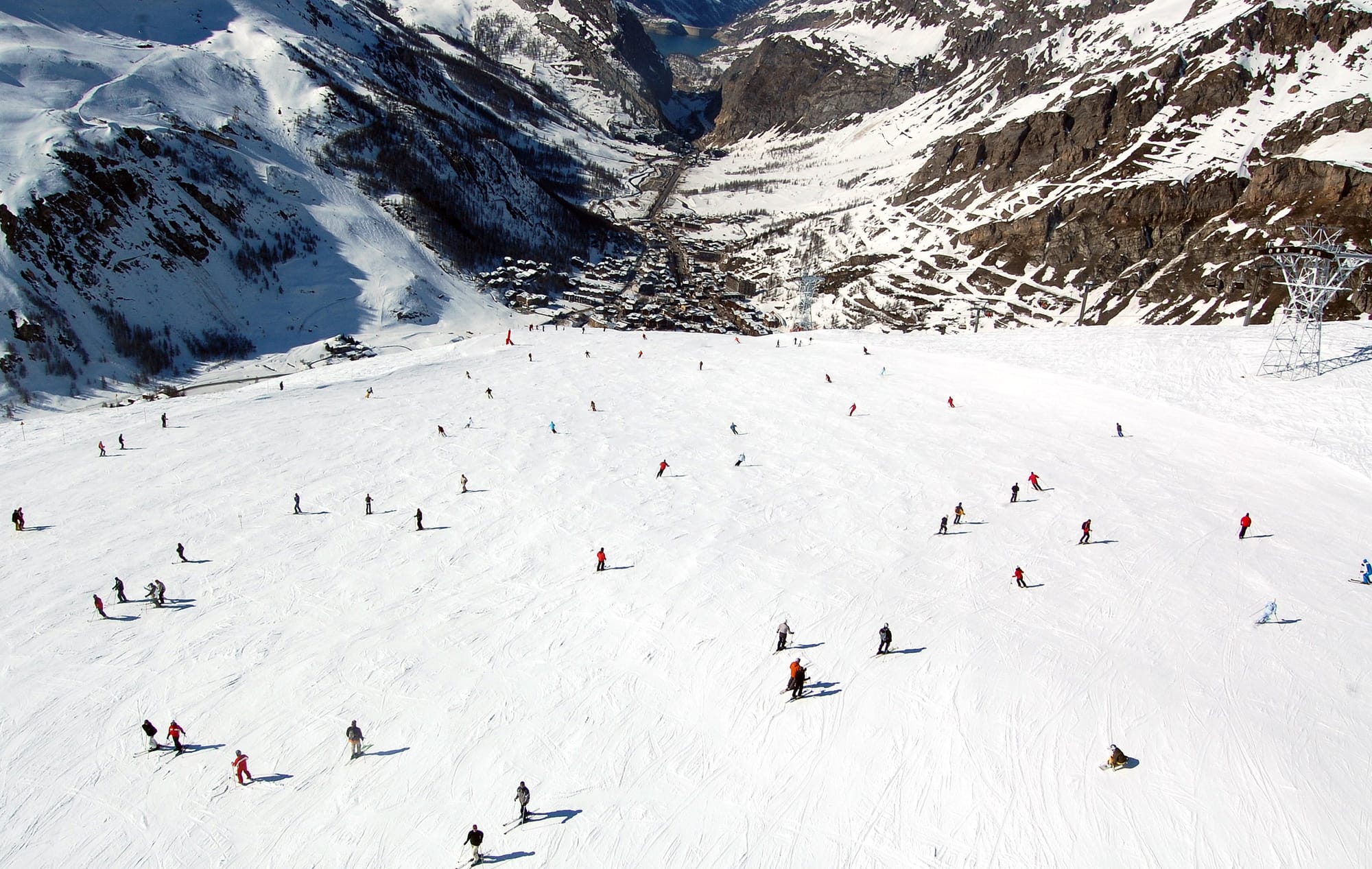
Tignes and Val d’Isère are among the most snow-sure resorts in France. The shared ski area rises from 1,550m to 3,456m and includes skiing on the Grande Motte glacier. Both resorts have a solid snowfall record and are backed up by extensive snow-making equipment. They are therefore among the more dependable choices in France for early or late-season holidays.
Tignes has more accommodation above 2,000m, which can make returning to resort on snow more reliable. Val d’Isère’s off-piste areas can be excellent after fresh snowfall, while its lower tree-lined runs provide useful shelter in poor visibility.
Snow-reliability winner: Draw
Which is easier to get around?
Tignes is divided into several villages. Le Lac and Val Claret provide the easiest access to the main ski area and have the most substantial facilities. Les Brévières and Tignes 1800 are quieter and more self-contained, which may suit families wanting a calmer base. However, they are farther from the main terrain around Le Lac and Val Claret and make journeys towards Val d’Isère longer.
Val d’Isère’s compact centre is easy to explore on foot, with most of its shops, restaurants, bars and other amenities clustered around Avenue Olympique and the old village. La Daille is a separate purpose-built area at the entrance to the resort, offering convenient access to Bellevarde but fewer facilities. At the opposite end, Le Fornet is a quieter, more traditional hamlet with access towards the Pissaillas glacier. Frequent free buses connect both areas with Val d’Isère centre.
On skis, both provide straightforward access to the linked area. Tignes is stronger for doorstep convenience, while Val d’Isère is easier to explore on foot in the evening.
Skiing convenience winner: Tignes
Village convenience winner: Val d’Isère
Which is better for families?
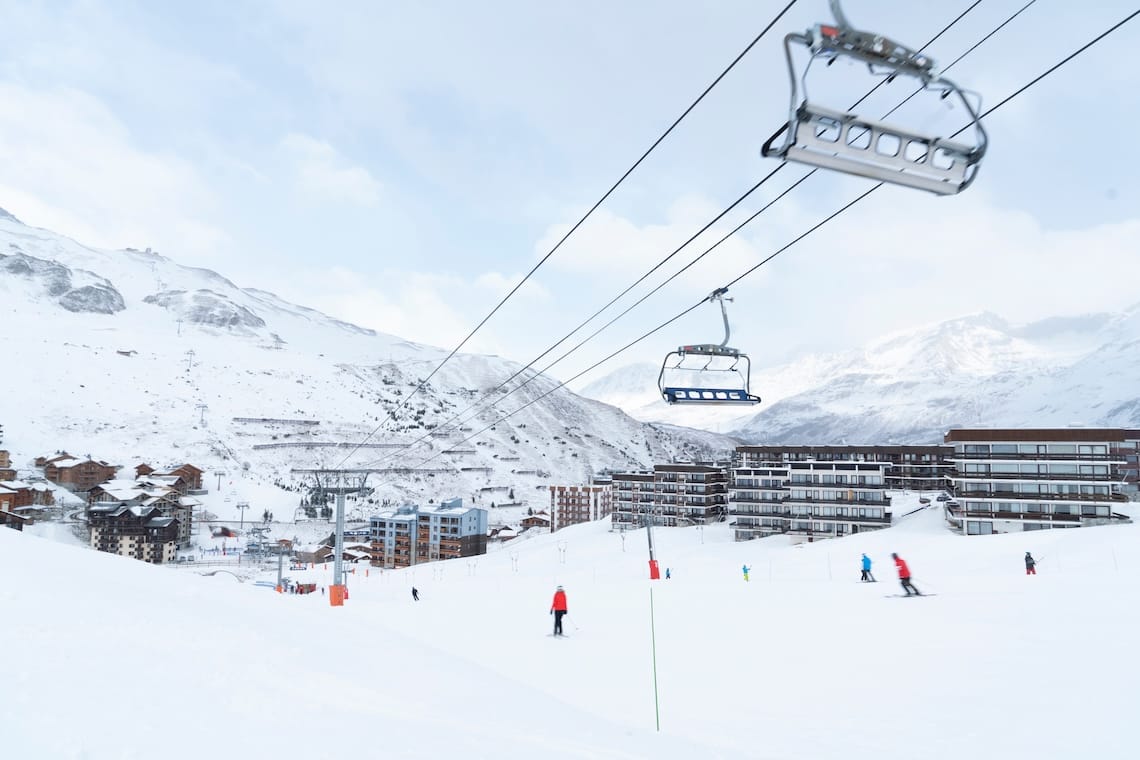
Both resorts featured in our ranking of the best family ski resorts in France. Tignes is generally the better option for families prioritising ski-in-ski-out convenience, self-catering apartments and shorter journeys between the slopes and accommodation. Its sports centre and range of non-ski activities also help on rest days. Le Lac is a great base for most families because it combines convenient slopes and amenities with Le Lagon, which has swimming pools, slides and a toddler area. Val Claret also has a cinema with English-language screenings.
Val d’Isère works particularly well for families who want more restaurants, shops and village atmosphere. However, accommodation and eating out usually cost more. The resort centre is the most practical choice, placing families close to the Savonnette beginner slopes and the Centre Aquasportif, with its pools and children’s facilities.
Family winner: Tignes
Which has better après-ski and nightlife?
Val d’Isère is the clear winner for après-ski (we even placed it fifth in our ranking of the best après resorts). La Folie Douce above La Daille provides slope-side cabaret and DJ sets, while Cocorico hosts live music at the foot of the Solaise slopes. In the centre, Le Petit Danois combines live après bands with evening DJs, and Doudoune Club is the main late-night option.
Tignes also has a good après scene, particularly in Val Claret and Le Lac. Cocorico Val Claret has a large outdoor terrace with live music and DJs, while ski-in/ski-out Loop Bar in Le Lac is known for live bands and party nights. For later evenings, Inside Bar in Val Claret offers DJs and themed nights. The only downside is that the nightlife is divided between separate villages, so it's not quite as easy to segue from an afternoon into an evening venue.
Après-ski winner: Val d’Isère
Which is better for food?
Val d’Isère has the broader restaurant scene, ranging from casual pizza and Savoyard cooking to high-end dining. For a special occasion, Michelin-starred La Table de l’Ours offers refined mountain-inspired cooking at the foot of the Face de Bellevarde. For a more everyday meal, La Corniche serves traditional Savoyard dishes in the old village. We also love L’Edelweiss for lunch, a sunny chalet restaurant beside the Mangard piste above Le Fornet. Its terrace has excellent views over the valley.
Tignes has fewer choices, but still covers both ends of the market. Michelin-starred Ursus in Val Claret is the standout for a special dinner, while La Pignatta is a relaxed option for pizzas, pasta and family meals.
Restaurant winner: Val d’Isère
Which is cheaper?
The same full-area lift pass covers Tignes and Val d’Isère, with no supplement required to ski between them. The main cost difference is therefore accommodation and spending in resort: Tignes generally has more self-catering apartments and lower-priced options, while Val d’Isère has a greater concentration of premium hotels, restaurants and bars.
Overall, expect to pay a slight premium for accommodation in Val d'Isère. According to Iglu Ski booking data for the same month for the last couple of seasons across all property and catering types, costs are on average around 6% higher in Val d'Isère than in Tignes, with the biggest price differences found across 4 and 5-star self-catered properties.
Value winner: Tignes
Which is better for non-skiers?
Val d’Isère’s attractive centre, shops, restaurants and pedestrian-friendly atmosphere make it the better base for someone who won’t ski every day (or at all). The Centre Aquasportif adds swimming, spa and fitness facilities, while cleared winter walking routes include the riverside path towards Le Fornet. It’s easier to fill an unplanned afternoon without feeling you're missing out by not being on the slopes.
Tignes offers a wider range of organised activities and sports facilities, including the Le Lagon aquatic centre, Tignespace and experiences such as ice diving and ice floating on the lake. However, its amenities are divided between separate villages, so non-skiers may rely more heavily on the free shuttle network to get around.
Non-skier winner: Val d’Isère
Tignes or Val d’Isère: the final verdict
- Best for beginners: Tignes
- Best for intermediates: Draw
- Best for advanced skiers: Val d’Isère
- Best for snow reliability: Draw
- Best for slope-side convenience: Tignes
- Best for a walkable resort centre: Val d’Isère
- Best for families: Tignes
- Best for après-ski and nightlife: Val d’Isère
- Best for restaurants: Val d’Isère
- Best for value: Tignes
- Best for non-skiers: Val d’Isère
We’d choose Tignes if slope access and value are most important to you, particularly if you're going as a family or group of mixed abilities. Le Lac is the best all-round base, while Val Claret is better for higher-altitude accommodation and livelier evenings. Val d’Isère is worth paying more for if you want an attractive centre, a stronger choice of restaurants and après that doesn’t require much planning. You’ll ski the same 300km area from either resort, so don’t let the piste map make the decision for you.
Still choosing between Tignes and Val d’Isère? Give our ski specialists a call. They can help you compare the accommodation, travel options and village locations to find the right ski holiday for your group.