


 Favourites
 Customer portal


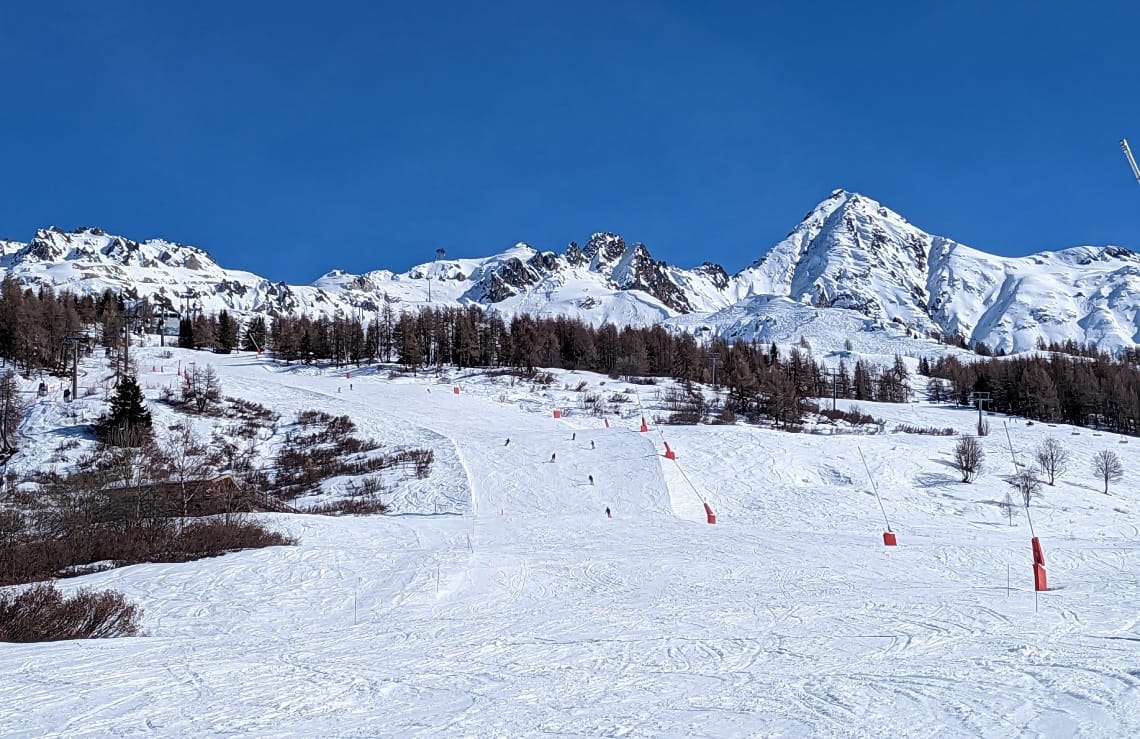
It’s a late afternoon in spring and a gloriously sunny day. You’ve found the north facing slopes which are protected from the sun’s warmth and you cruise down a near empty, almost perfect piste, happy in the knowledge that the lifts are still open for another hour before you hit the après.
Sounds good, right? While January and February are generally the preferred months to go skiing due to snow surety and reliable conditions, the late season, which stretches from mid March to late April, can offer up conditions to rival and even surpass the more popular skiing months.
That’s not to say you’re guaranteed perfection (and there will definitely be compromises in snow quality, particularly in late spring), but if you pick the right place, wear the right gear, and pay attention to slope orientation (more on this later), you might never go skiing earlier than March again.
In this guide to late season skiing, we explain spring ski conditions, give you our top tips for skiing in March and April, and clue you into the top resorts for spring skiing.
In our guide to spring skiing, we cover:
1. What are spring skiing conditions like?
2. Top tips for skiing in spring conditions
3. The benefits of spring skiing vs peak winter
4. Is spring skiing good for beginners?
5. What to wear for a spring skiing holiday
6. Top resorts for spring skiing
What are spring skiing conditions like?
Spring is generally warmer than peak winter, with temperatures more likely to push 10 degrees mid mountain, rather than minus 10. This has two effects. Firstly, it means you can wear fewer layers and get a fetching goggle tan while you sip on a cold beer or a cup of coffee in a deckchair (it always feels warmer than it actually is in the mountains). Secondly, it means that the snow changes throughout the day, often icy first thing after the overnight freeze, and becoming slushier into the afternoon as the temperature rises.
Due to the warmer temperatures, between mid morning and midday is usually the sweet spot for the best snow conditions. Slushy snow, which is quite sticky in nature, tends to be more of a problem on the lower slopes and in the warmer days of late March and April, though there are ways to get around the slushiness, which we’ll cover in the next section.
Top tips for skiing in spring conditions
If you're looking to ski in spring, here are some top things to consider:
1. Pay attention to slope orientation
As it was for sailors in bygone days, the position of the sun in the sky (and its relation to the slopes) is useful for springtime skiers. In the morning, you’ll want to head to the east facing slopes, ideally 30 minutes after the sun first hits them, when they’ll be nicely softened up. By mid morning, you can expect the best conditions on the south facing slopes, and later in the afternoon, when the sun is high, you can avoid the slush by heading to the shady north facing slopes.
2. Go high to avoid the freeze/thaw cycle
Another way to avoid the freeze/thaw cycle and slush, especially after lunch, is to head up to pistes above 2,500m, where the altitude ensures cooler conditions.
3. Make sure your skis are waxed
However much you pay attention to altitude and orientation, you will inevitably encounter some slushy snow on the way back down to resort, which is stickier than normal snow. The best way to combat the stickiness is to wax your skis, which will make it easier to glide over the slush.
4. Avoid turning on ice patches if you can
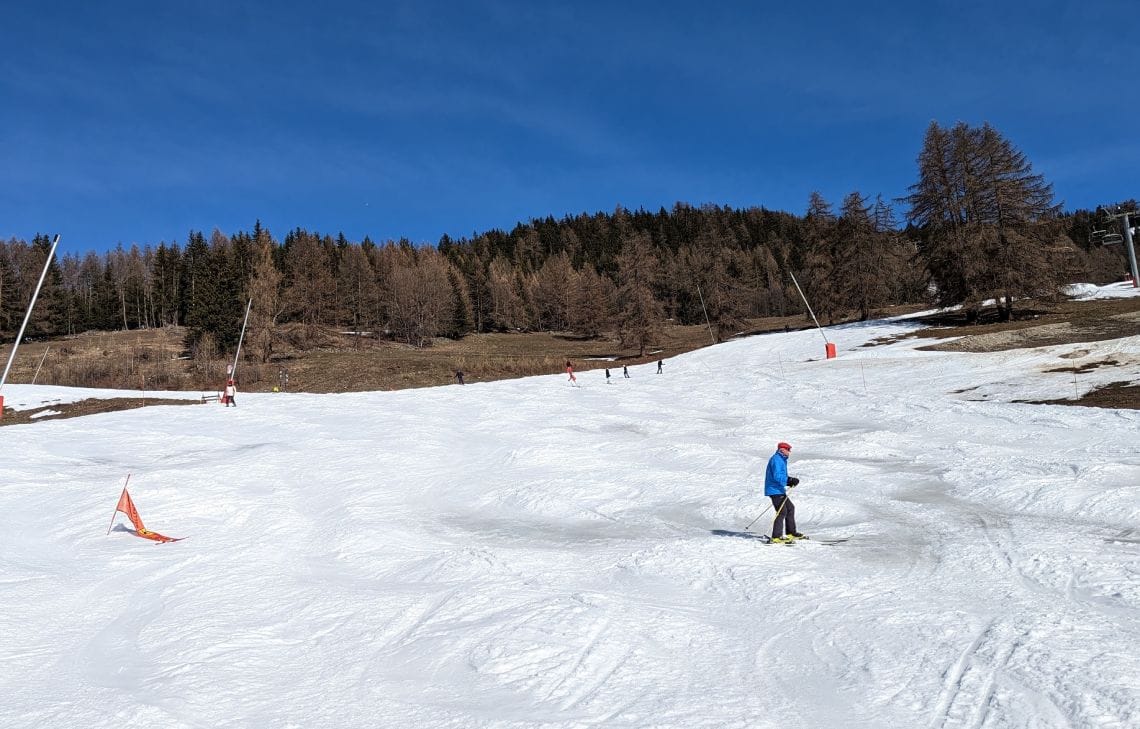
The slushy (water-heavy) snow is likely to turn to ice after a cold night. If you see a suspiciously smooth, glassy patch of piste, ski straight over it, as attempting a parallel turn on an ice patch tests even experienced skiers. You can also head to the side of the piste to do your turn where the snow is likely to be softer.
5. Traverse the piste to control your speed
Sun-exposed pistes can get increasingly bumpy throughout the day, due to mounds of slush that are kicked up when people turn. If you're faced with a bumpy piste, traverse across, skiing over the bumps and turning at the side of the piste where the snow is often a lot smoother.
6. Seasoned skiers should pick skis with sharp edges
Sharp edges are ideal for icy conditions as they cut into, and offer more traction, when you’re carving.
7. Wear sun cream
If you want the lasting legacy of your holiday to be just great memories and not a nasty sunburn, remember to slap on some 50+ sun cream before you hit the slopes. This is even more important in spring, when there’s more hours of sunshine, stronger UV rays, and, thanks to the warm weather, you’re less likely to have your face covered.
The benefits of spring skiing vs winter skiing
1. It's warmer - ditch some layers, rip off the buff and enjoy a chairlift ride without the cold biting at your cheek bones
2. Good snow coverage - in many resorts, you're likely to see better snow coverage in late March/early April than in December/early January
3. Quieter pistes - enjoy quieter pistes, particularly from mid to late March onwards (just avoid the Easter holidays)
4. More hours of skiing - for the majority of resorts, the lifts stay open longer, with some resort lifts not closing till 17.30pm
Is spring skiing good for beginners?
Spring is also a great time for beginners to head to the slopes. For one thing, the sun makes for a more pleasant learning temperature - it can get a bit chilly when you're standing around listening to your instructor. The sunshine tends to create a generally more feel-good vibe as well, particularly when you're sat in a deck chair enjoying a well-earned, post-lesson drink.
Outside of the Easter holidays, the slopes are quieter. If you pick a 9am lesson timeslot, you'll be able to get out and make the most of the good conditions before the slopes get slushy. And the good thing about learning in less than perfect snow is you'll be well-equipped from the get-go on the correct techniques to handle all sorts of conditions.
No crowds at the lifts also means more time spent skiing, which makes it easier to improve. And when you inevitably do fall, the soft stickier snow makes a more pleasant crash mat than hard, icy pistes.
What to wear/pack for a spring ski holiday
Spring skiing calls for a slightly different packing list to a mid-winter trip. The days are longer, the sun is stronger and the afternoons can feel warm, but mornings can still be cold and conditions can change quickly at altitude. The aim is not to pack less, but to pack smarter.
The most important thing is to bring layers. You want lighter, breathable clothing for sunny afternoons, but enough warmth to stay comfortable on early lifts, shaded slopes and bad-weather days.
Choose light, breathable layers
Spring conditions can vary a lot over the course of a day, and thermals and a thick insulated jacket can quickly feel too warm, so it’s better to build your outfit from lighter layers.
Start with a lightweight or midweight base layer made from merino wool or synthetic technical fabric. These help wick sweat away from the skin and regulate temperature. Avoid cotton, as it holds moisture and can leave you feeling cold once you stop moving.
For your mid layer, a fleece or lightweight insulated jacket is usually enough. You want something warm enough for the morning, but easy to remove if the sun comes out.
Bring a waterproof shell or lighter ski jacket
A shell jacket is an outer layer designed to keep the weather out. It is usually waterproof and windproof, but not heavily padded, so you control warmth with the layers underneath. If you prefer an insulated ski jacket, choose something lighter and breathable, ideally with ventilation zips to help you cool down on warmer days.
Waterproof ski trousers or salopettes are still essential. Spring snow can be wetter than mid-winter powder, especially on lower slopes later in the day, so good waterproofing and ventilation are useful.
Pack both goggles and sunglasses
The spring sun can be strong in the mountains, and glare from the snow can make conditions very bright. Goggles are still the best option for skiing or snowboarding, as they protect your eyes from wind, glare and changing weather.
For sunny days, darker, mirrored or bright-light lenses can be useful. If you only want to pack one pair, an all-weather lens is a sensible compromise. Sunglasses are also worth bringing for walking around the resort, sitting on sunny terraces and après-ski.
Don’t forget sun protection
The sun is stronger at altitude, and snow reflects light back towards your face, so you can burn faster than you might expect.
Pack high-factor sunscreen, ideally SPF 50, and apply it before you head out. Pay attention to your nose, cheeks, ears, lips and under your chin. Keep sunscreen and lip balm in your jacket pocket so you can reapply during the day, especially if you are stopping for lunch outside.
Bring proper gloves, socks and small accessories
A lighter ski glove is usually fine for mild days, while glove liners or a warmer pair are useful if you feel the cold.
Proper ski socks are also worth packing. Thinner technical ski socks can be more comfortable in spring than very thick ones, as they fit better inside ski boots and help manage moisture.
A neck warmer or buff is another small but useful item. It adds warmth on cold lifts and windy ridges, but can be pulled down or tucked away when the sun comes out.
Final packing tip
Before you travel, check the forecast for both the resort village and the upper slopes. Temperatures can vary significantly with altitude, so do not rely on the village forecast alone. Pack for options, and you will be ready for cold morning pistes, warm afternoon terraces and everything in between.
Top resorts for spring skiing
The best decision you can make to maximise your chances of having a great spring ski trip is to choose the right resort.
Thanks to their height, average snowfall, and weather our top resorts for March spring skiing are:
- Zermatt - with a snow range of 1,620 - 3,883m and an average 63cm of snowfall in March, Zermatt’s high altitude runs and conditions make at an ideal spring destination
- Cervinia - linked to Zermatt, and also enjoying a healthy spring snowfall, Cervinia is Italy’s premier late season skiing resort
- Val d’Isère - as well as decent snow coverage and pistes up to 3,456m, Val d’Isère enjoys a pleasant 3.3 days of sun every week on average in March
Read more:
Read our guide to skiing in March for all the top March ski resorts and the reasons why they're the best resorts to go to.
And our best resorts for skiing in April are:
- Val d’Isère - with more than half its pistes above 2,500m, snow is pretty much guaranteed in Val d’Isere throughout April and sometimes into early May
- Val Thorens - of course Europe’s highest resort (2,300m) is great in April - with the majority of Val Thorens's slopes above 2000m, spring snow is a given
- Obergurgl - many of this Austrian snow-sure resort’s north-facing pistes stretch up to 3,000m+, and even if snowfall is below average, Obergurgl claims to have 100% artificial snow coverage
Read more:
Read our guide to the top April ski resorts for lots more lofty resorts that are ideal for a late season spring ski trip.
Read more:
France offers some of the best April skiing in Europe. We've put a dedicated guide to the top French resorts for April skiing to help you choose your next ski holiday destination.
Thinking of taking the family for an Easter ski trip? These resorts are family orientated and offer great spring skiing:
- La Plagne - a lowkey resort with an epically vast and high ski area.
- Les Arcs - next door to La Plagne, connected via the Vanoise Express. Les Arcs is livelier and offers high, north facing slopes.
- Tignes - often gets the most snow out of all the late season resorts and offers a really high ski area to boot. Tignes also has slopes connecting with Val d'Isère.
Read more:
Check out our guide to Easter skiing for even more fantastic, family-friendly Easter ski resorts
Ready for your spring ski holiday?
Whether you’re a seasoned skier or a beginner thinking about their first trip, a spring ski trip is definitely worth it. Everyone will enjoy the emptier slopes, the longer days, and the nicer weather. Why not speak to one of our ski experts? They'll help you find and book your perfect spring ski holiday.