


 Favourites
 Customer portal


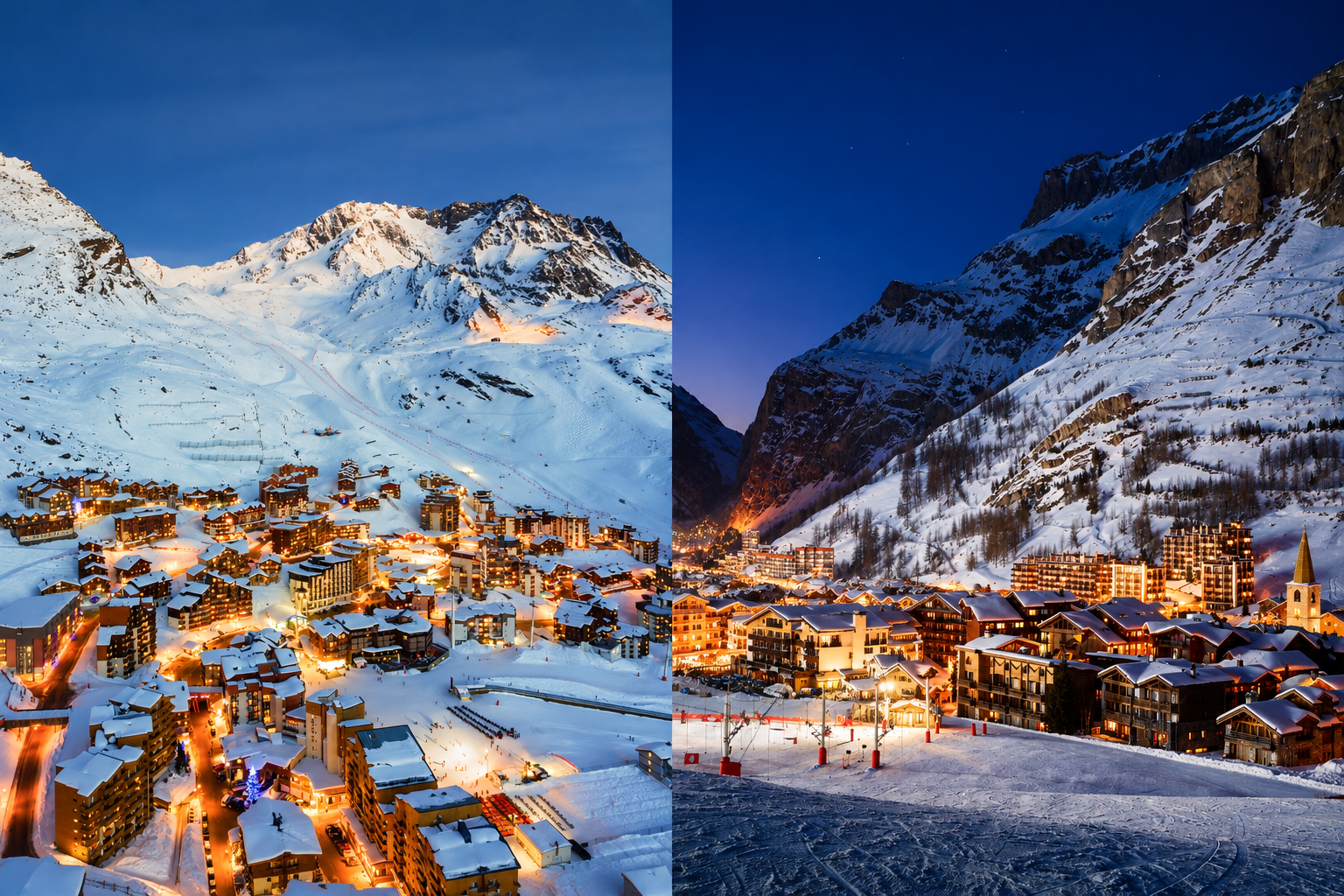
Val Thorens and Val d’Isère both offer high-altitude slopes and lively après. Val Thorens is the highest resort in Europe, with the rest of the Three Valleys within reach. Val d’Isère is home to challenging skiing across its shared ski area with Tignes, and a buzzy, attractive town.
Both are incredibly popular with British skiers. Ski holidays to Val Thorens are searched more than for any other resort on Iglu Ski, with Val d’Isère in third place (just behind Tignes). But where should you choose for your next trip?
In this article, we compare Val Thorens and Val d’Isère on skiing, snow reliability, beginners, après-ski, families and cost to help you find the right resort for your holiday.
Val Thorens vs Val d’Isère at a glance
| Key factor | Val Thorens | Val d’Isère |
|---|---|---|
| Best for | Doorstep skiing, big ski days and late-season trips | Challenging skiing, restaurants and village life |
| Local ski area | 150km with Orelle | 150km in Val d’Isère |
| Full linked area | 600km across the Three Valleys | 300km with Tignes |
| Resort altitude | Around 2,300m | Around 1,850m |
| Beginners | Free magic carpets and EasyRider progression | Savonnette and the Solaise learning area |
| Intermediates | Long cruising days and links to other valleys | Varied terrain around Bellevarde, Solaise and Le Fornet |
| Advanced skiers | Combe de Caron, Boismint and Three Valleys variety | Face de Bellevarde, Combe Martin and Le Fornet |
| Snow reliability | Very good, more likely to have snow at resort level | Very good |
| Families | Particularly convenient for skiing together | Strong facilities and an attractive village for time off |
| Après-ski | La Folie Douce, 360 and lively bars in resort | La Folie Douce, Cocorico and a lively village centre |
| Restaurants | Plenty of choice, including special-occasion dining | Broader village dining scene |
| Non-skiers | Sports and organised activities | More to explore on foot |
| Relative cost | £££ | £££ |
| Access from Geneva | Around 3 to 3 hours 30 mins by road | Around 3 hours by road |
The quick verdict
Choose Val Thorens if: You want ski-in-ski-out access, the Three Valleys on your doorstep and a lively après-ski scene within easy reach at the end of the day.
Choose Val d’Isère if: You want demanding pistes, world class off-piste possibilities and a village with restaurants, shops and plenty going on.
Which has the better ski area?
Val Thorens and Orelle have around 150km of local pistes. The full Three Valleys pass extends that to 600km, including Les Menuires, Méribel and Courchevel. Val d’Isère also has 150km locally, with Tignes taking its full linked area to 300km.
Both have enough local skiing for a week. Val Thorens’ advantage is the chance to head off and explore the wider Three Valleys each day – remember to allow time for the return lifts if you do.
Winner: Val Thorens for the size of the full linked area
Which is better for beginners?
Val Thorens’ Castor and Pollux, Musaraigne and Campagnols magic carpets are free, and easy to access between the base of the Roc, Cascades and 2 Lacs lifts. The EasyRider beginner pass knocks a generous 50% off the regular lift pass price and is available for 4 hour and 1 day durations. It allows you to use 5 of the resort's lifts, including the Cairn, 2 Lacs, and Caron gondolas and the Cascades and Moutières chairs. At the top of each of those lifts you'll find some of the resort's best green and blue pistes. The 2 Combes green, from the top of Cascades, is a smart stepping stone. Our Val Thorens beginner’s guide explains the best progression routes.
Val d’Isère also has a learner slope next to the village Savonnette, though it's more lmited than Val Thorens. Once you're done there, you need to take the Solaise gondola to its higher learning area on the (sometimes) sunny plateau. The resort has introduced Easy Skiing signage across the Solaise and Bellevarde areas, which you can follow for safest return to the resort. Alternatively, take the gondola or Olympique cable car back down. See our Val d’Isère beginner’s guide.
Winner: Val Thorens, narrowly
Which is better for intermediates?
Val Thorens is particularly good for its high volume of wide, high-altitude blue and red runs. Try the blue Tête Ronde below the Péclet lift, or make the most of your Three Valleys pass to discover all the world's largest interconnected ski area has to offer. On Pointe de la Masse in Les Menuires, the red Fred Covili connects with the blue Vallons for confident intermediates.
While Val Thorens has twice as much terrain across its wider ski area, size isn't everything, and Val d’Isère also has top-notch reds and blues in its local ski area and over in Tignes. The resort's intermediate pistes offer some fun technical challenges, as well as beautiful cruising. Check out the Bellevarde’s Grand Pré area, including the blue Club des Sports, while Solaise and Le Fornet provide a change of scenery.
Winner: Val Thorens
Which is better for advanced skiers?
While you'll find plenty to get your skis stuck into across the Three Valleys, Val d’Isère is rightly regarded as one of the best resorts in France for advanced skiers. The Face de Bellevarde and the black Combe Martin on Solaise alone are proof of this, but there's also challenging terrain around Le Fornet and extensive off-piste possibilities too – always take a qualified guide if you want to explore beyond the marked runs.
Nevertheless, Val Thorens holds its own. Combe de Caron starts steeply, and the Boismint and Plan de l’Eau reds make for a long, demanding descent, and the wider Three Valleys adds plenty more. Val Thorens also has the more to offer for freestylers. the VT Park is a 70,000m² freestyle paradise on the Plateaux slopes. It features an 800m boardercross, three zones of varying difficulty, rails, tables (jumps), a half-pipe, and a Jump'Air airbag.
Winner: Val d’Isère
Which is more snow-sure?
The highest resort in Europe, Val Thorens sits at 2,300m, with skiing reaching around 3,230m, which makes for pretty reliable conditions right from the door of your accommodation. The resort is usually able to open in late November and closes in early May, a longer season than its Three Valleys neighbours. For example, in 2026/27, Val Thorens–Orelle is scheduled to open from 21 November to 2 May, while the full Three Valleys area runs from 5 December to 18 April.
Val d’Isère’s village is lower at 1,850m, but its high slopes and link to Tignes, where skiing reaches around 3,450m, give it excellent snow reliability too. Its season usually runs from late November to early May, with 28 November to 2 May scheduled for 2026/27. Both resorts therefore offer a long season, although Val Thorens has the advantage of higher slopes at resort level and an earlier planned opening this winter. As always, opening dates and available terrain remain subject to conditions.
Both feature in our guide to France's most snow sure resorts.
Winner: Val Thorens
Which is better for families?
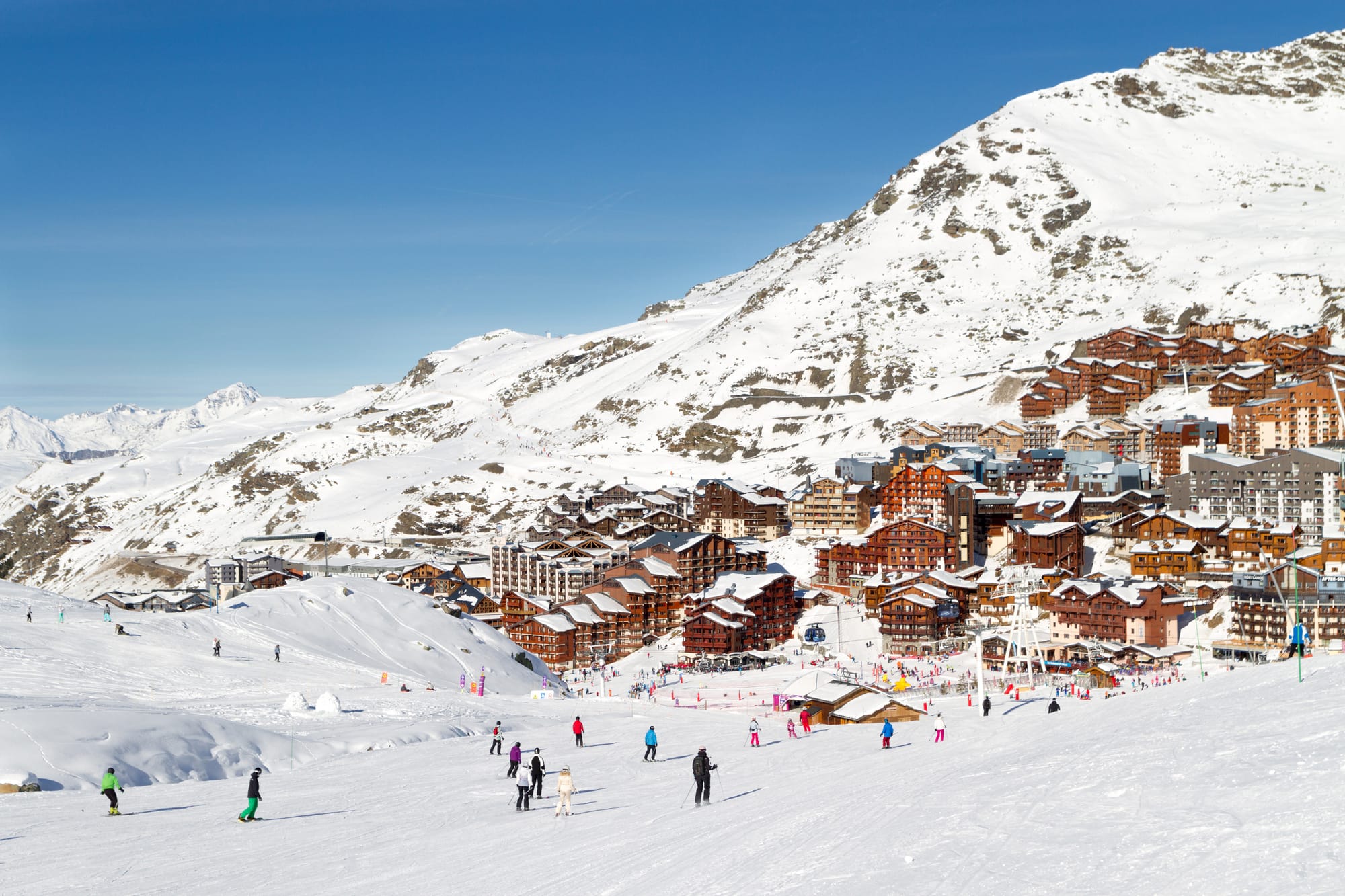
Val Thorens’ main advantage for families is how easily you can fit skiing around the children. Much of the accommodation is ski-in-ski-out, making it easier to pop back for lunch, collect forgotten gloves or finish early when they've had enough. Four free magic carpets let beginners practise, while the local green and blue runs offer plenty of scope for skiing together as confidence grows. Off the slopes, Le Board has swimming pools and a Fun Park, while Cosmojet is an option for children aged five and over accompanied by an adult.
Val d’Isère has excellent family facilities too, including gentle skiing and ValKids play features on Solaise, plus swimming and ice skating back in the village. Its big financial advantage is free lift passes for under-eights, compared with under-fives in Val Thorens. For a family with children aged five to seven, particularly several of them, that saving could outweigh Val Thorens’ convenience. Compare the full holiday price before deciding. We featured both in our French family resort guide.
Winner: Val Thorens
Which has better après-ski?
Both know how to throw a party, but Val Thorens has the edge if you want lively après followed by a night out. La Folie Douce brings DJs and performers to its mountain terrace, while 360 offers another outdoor party spot with mountain views and a strong focus on dance music. Back in the resort, The Frog combines music, pub food and live sport, while Saloon keeps things going with bands and DJs. The compact centre is a real advantage: you can return to your accommodation, change out of your ski gear and head out again without a long journey across town. See our Val Thorens après guide for more tips.
Val d’Isère is just as capable of a big afternoon party, with appealing options for quieter evenings too. Its original La Folie Douce sits above La Daille, mixing cabaret, DJs and terrace dancing. Cocorico, at the foot of the village slopes, is particularly convenient for meeting friends after skiing: its outdoor stage hosts live music and DJs, and you’re already back at resort level. Later, Le Petit Danois offers more music, while the Blizzard Hotel Bar is a comfortable place to settle into a sofa with a drink. Get the lowdown in our Val d’Isère après guide.
Winner: Draw
Which is better for restaurants?
Val d’Isère has the stronger village dining scene. Try La Mourra for a special dinner, La Baraque for food with live music, or Le Signal above Le Fornet for lunch on the mountain. It’s easy to pick a different place in the centre each night.
Val Thorens has good alternatives: Les Explorateurs for an occasion, La Maison for a meal in resort and Chalet de la Marine for lunch between runs. See our Val Thorens mountain restaurant guide.
Winner: Val d’Isère
Which is better for non-skiers?
Val d’Isère would be our choice if you're spending most of the week off the slopes. Its shops, cafés and restaurants give you more scope for an unhurried day, while the old village’s narrow streets and stone-and-wood chalets are worth exploring. The Centre Aquasportif adds swimming and spa facilities, so your plans don't need to depend entirely on the weather. You can also buy a pedestrian pass and take the Solaise gondola up to Le Lounge for mountain views, or follow the groomed footpath towards Lac de l’Ouillette. Stay near the centre for the most freedom to come and go.
Val Thorens is better for rest days and non-skiers who enjoy planned activities. Le Board offers swimming, wellness facilities and indoor sports, alongside the resort’s cinema and bowling. Outdoors, you can try a guided snowshoe outing or buy a pedestrian pass to reach viewpoints such as Cime Caron – you don’t need to ski to enjoy the high mountains. Its compact layout also makes meeting up with the skiers in your group straightforward. However, there's less variety here for a whole week of browsing, café stops and village walks: the appeal is clearer if you want to mix relaxation with specific activities. Our Val Thorens non-skiing guide covers the options.
Winner: Val d’Isère
Which offers better value?
There’s no clear winner on package prices in the Iglu Ski deals we compared. Similar seven-night holidays are often closely priced, with Val Thorens cheaper in one comparison and Val d’Isère cheaper in others. The property, room size and offer can make more difference than the resort, so compare the same dates, departure airport and board basis before deciding.
Adult lift passes favour Val Thorens for the peak part of 2026/27: €367.50 for six days in Val Thorens–Orelle or €421 across the Three Valleys. Val d’Isère’s six-day Tignes–Val d’Isère pass costs €468 and includes a seventh day. The passes cover different areas, so compare what you’ll actually ski. Val d’Isère’s under-eight free passes may alter the calculation for families.
Winner: Draw
Which is easier to reach?
From Geneva, allow around three hours by road to Val d’Isère and roughly three to three and a half hours to Val Thorens, depending on traffic. Flights to Chambéry or a rail journey via Bourg-Saint-Maurice for Val d’Isère or Moûtiers for Val Thorens can change the total travel time.
Val Thorens restricts on-street parking, though you can stop to unload before using a resort car park. In Val d’Isère, check whether your accommodation is in the centre or further away in La Daille or Le Fornet.
Winner: Draw
The verdict: Val Thorens or Val d’Isère?
- Best for the largest linked ski area: Val Thorens
- Best for beginners: Val Thorens, narrowly
- Best for intermediates exploring widely: Val Thorens
- Best for advanced skiing and off-piste: Val d’Isère
- Best for freestyle: Val Thorens
- Best for snow around the resort: Val Thorens
- Best for families prioritising slope access: Val Thorens
- Best for après-ski: Draw
- Best for restaurants: Val d’Isère
- Best for non-skiers: Val d’Isère
- Best for value: Draw
- Easiest to reach: Draw
Both resorts give you memorable skiing and plenty to do afterwards. Choose Val Thorens if you want to start high, keep the journey to the pistes short and make the most of the Three Valleys. Choose Val d’Isère if challenging runs, a good dinner and time spent around the village carry equal weight in your plans.
Still deciding? Speak to an Iglu Ski Specialist and we’ll help you find the right resort, accommodation and lift pass for your group.