


 Favourites
 Customer portal


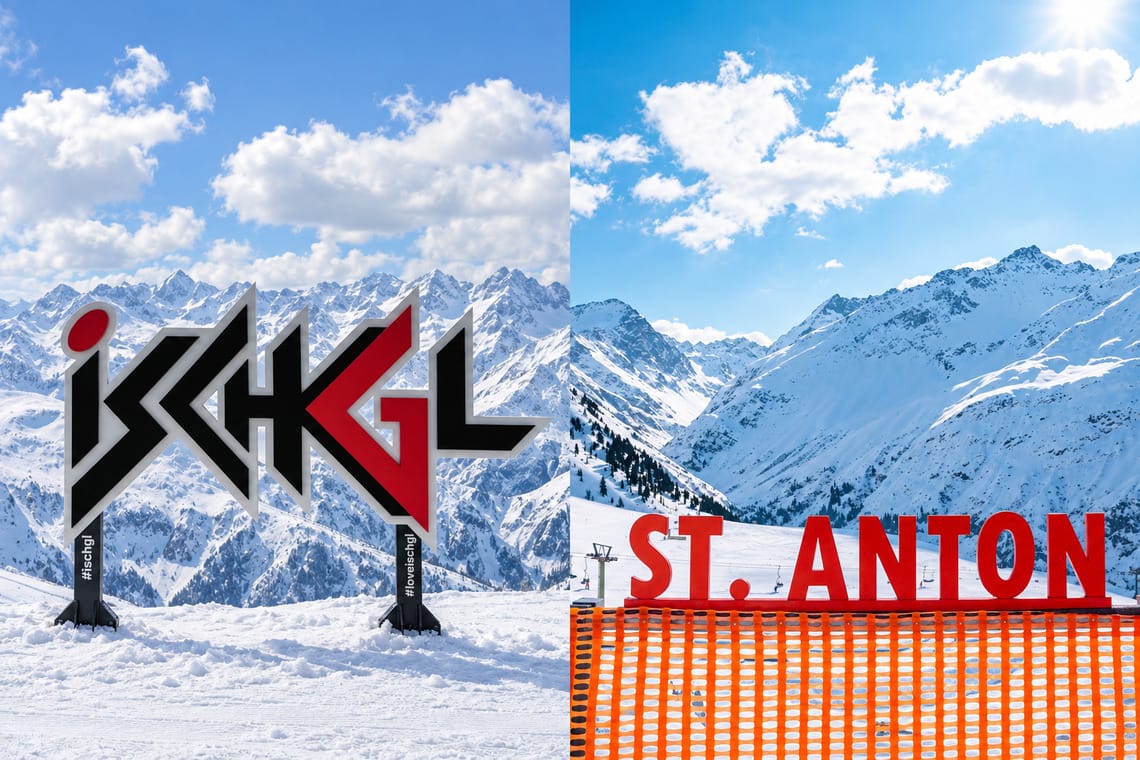
St Anton and Ischgl are two of Austria’s biggest names for skiing and après, and at first glance offer similar holidays. Even their ski areas (300km vs 239km) and altitude (1,304m vs 1,377m) are relatively similar in size.
But beyond the headline stats, they deliver very different experiences. So, which should you choose for your next big ski trip?
St Anton combines challenging terrain, deep-snow potential and traditional mountain bars within the extensive Ski Arlberg area. Ischgl is better known for immaculately groomed pistes, fast lifts and a sophisticated après and nightlife scene.
Here’s how the two resorts compare for beginners, experienced skiers, families and groups looking for a lively week.
St Anton vs Ischgl: Key facts
| Key factor | St Anton | Ischgl |
|---|---|---|
| Best for | Advanced skiing, off-piste and traditional après | Intermediates, efficient lifts and nightlife |
| Full ski area | 300km in Ski Arlberg | 239km in the Silvretta Arena |
| Resort altitude | 1,304m | 1,377m |
| Highest skiing | 2,811m | 2,872m |
| Beginners | Dedicated nursery slopes, but harder progression | Better for progressing beginners |
| Intermediates | Excellent but sometimes demanding | Excellent |
| Advanced skiers | Outstanding | Very good |
| Snow reliability | Excellent natural snowfall | Excellent altitude and snowmaking |
| Après-ski | Famous slope-side venues | Large, upmarket bars and clubs |
| Families | Best around quieter Nasserein | Good facilities but an adult atmosphere |
| Relative cost | £££ | £££ |
The quick verdict
Choose St Anton if: You’re a confident skier who wants challenging terrain, extensive off-piste possibilities and traditional Austrian après.
Choose Ischgl if: You prefer fast lifts, beautifully maintained pistes and a ski area that’s particularly well suited to intermediates.
Which is better for beginners?
Neither would be our first choice for a complete beginner, but both have dedicated learning areas.
St Anton’s main nursery slopes are around Nasserein, where beginners can start on magic carpets and short lifts without immediately entering the busier Galzig sector. There is also a reduced beginner lift pass covering a limited selection of lifts. Progression can be difficult, however: some blue pistes feel demanding and the home run past MooserWirt and Krazy Kanguruh becomes crowded and churned up late in the day. Our beginner’s guide to St Anton explains the most suitable areas in more detail.
Ischgl’s principal learning area is at Idalp, reached by the Silvrettabahn or Fimbabahn from the village. Its high position usually provides dependable snow, while the Sonnenbahn sits between blue pistes 6 and 9 and provides a manageable next step after the nursery slopes. New skiers can take the gondola back rather than tackling the lower valley runs.
Beginner winner: Ischgl
Which is better for intermediate skiers?
Ischgl is one of Austria’s strongest resorts for confident intermediates, with 140km of red pistes and 47km of blues. The runs around Idalp can become busy, so head towards Höllkar or cross into Switzerland for the more open terrain around Alp Trida. The 40.2km bronze Smuggler’s Circuit uses blue pistes and provides an achievable cross-border tour without requiring advanced terrain.
St Anton also has excellent intermediate skiing, but some routes are steeper, narrower or more heavily used. Blue 36 (one of our top 5 runs in St Anton) from Kapall is a good confidence-building cruise, while the long runs towards Alpe Rauz and Stuben provide more space than the central Galzig slopes. Exploring the full Ski Arlberg area can involve long days and careful attention to the final connecting lifts.
Intermediate winner: Ischgl
Which is better for advanced skiers?
St Anton is the clear choice for advanced skiers. Schindlerkar is a steep, mogulled black reached from the Schindlergratbahn, while marked ski routes around Mattun and the descents towards Stuben add further challenge. The north face of Valluga provides one of the area’s most famous off-piste descents, but access beyond Vallugagrat requires a qualified guide.
Ischgl has 47km of black pistes, including some genuinely steep descents, as well as freeride terrain around Piz Val Gronda. However, its greatest strength remains fast, groomed skiing rather than the quantity and variety of St Anton’s off-piste terrain.
Always ski with a qualified guide and carry the appropriate avalanche-safety equipment when leaving secured pistes.
Advanced winner: St Anton
Which is more snow-sure?
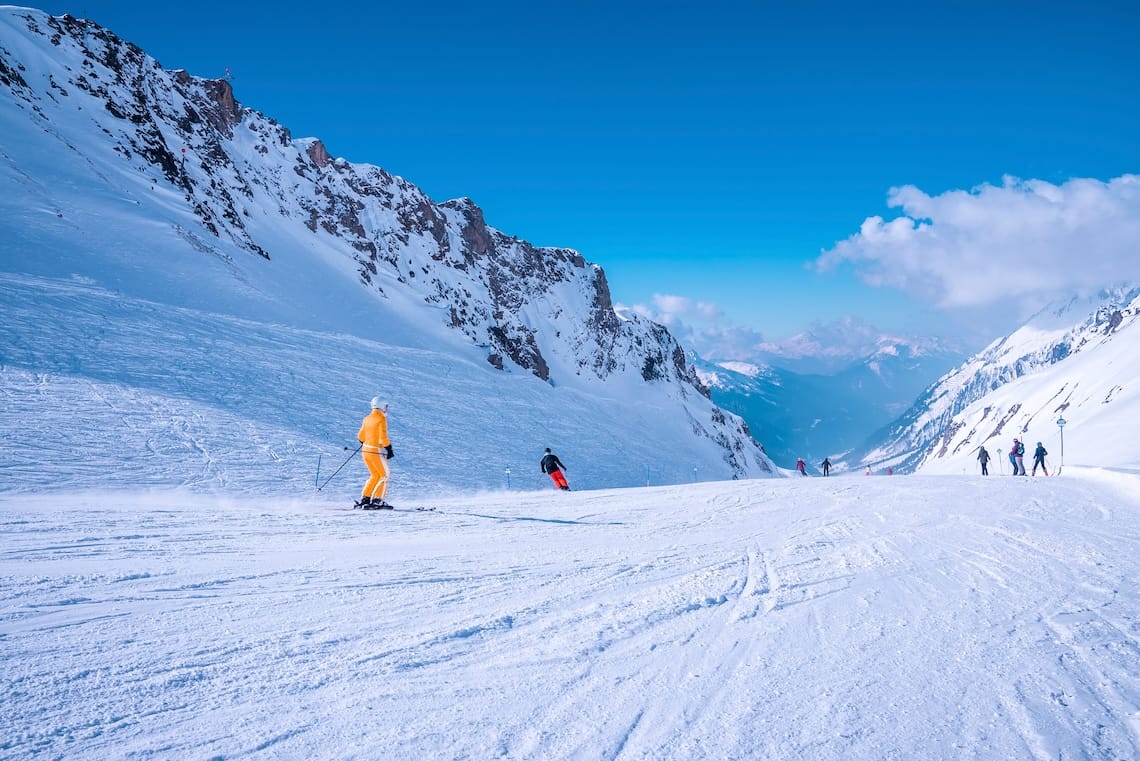
Both resorts are reliable choices. Ischgl’s ski area reaches 2,872m, with much of its terrain positioned high above the valley and supported by extensive snowmaking. Its season normally continues into early May, making it particularly dependable for a late trip.
St Anton reaches 2,811m and has a fantastic natural snow record. Its lower valley runs can be more variable during warm periods, but it’s the better choice when fresh snow opens up the ski routes and off-piste terrain for experienced skiers.
Best for piste reliability: Ischgl
Best for natural snow and powder: St Anton
Which ski area is easier to get around?
Ischgl has the more efficient layout. The Silvrettabahn, Fimbabahn and Pardatschgratbahn gondolas carry skiers from different parts of the village into the main area, while 46 lifts serve the linked Ischgl–Samnaun slopes. The network makes it relatively easy to complete a circuit and return to the village without studying the map at every junction.
St Anton forms part of the larger and more varied Ski Arlberg area, with 300km of pistes and a further 200km of additional off-piste terrain and ski routes. The benefit is that you get much more terrain. The downside is longer connections, busy linking pistes and the possibility of ending the day a considerable distance from your accommodation. The Run of Fame circuit alone covers 85km, so save a full-area exploration for a clear day and start early.
Convenience winner: Ischgl
Which is better for families?
Ischgl has excellent lifts, convenient mountain facilities and a high-altitude learning area at Idalp, where families will find nursery slopes, ski-school facilities and childcare. It works particularly well for families with older children or confident young skiers, while the snowpark and 7km night-time toboggan run provide additional entertainment. Ischgl’s lively après and late-night scene won’t appeal to every family, but you can minimise its impact by choosing quieter accommodation away from the busiest central bars.
Families in St Anton should stay around Nasserein. This quieter end of town provides direct access to the nursery slopes and Nassereinbahn, while the 4km Gampen toboggan run finishes nearby. The wider skiing and après atmosphere are better suited to confident teenagers than very young children or nervous beginners.
Both feature in our guide to the best family ski resorts in Austria, but neither is an obvious budget family option.
Family winner: Ischgl
Which has better après-ski and nightlife?
St Anton’s après starts on piste 50 at MooserWirt and Krazy Kanguruh. Both deliver the classic Arlberg combination of live music, steins and table dancing, but you still need to descend a busy, often chopped-up blue run afterwards. Basecamp provides an easier option at the bottom, before the nightlife moves into town.
Ischgl’s après is slicker and more concentrated. Paznauner Taja starts the party on the mountain, while Kuhstall and Schatzi lead the village après scene and the clubs continue well into the night. Ischgl also stages its Top of the Mountain concerts, with Westlife performing at the opening concert on 28 November 2026, two days after the ski season begins.
St Anton ranks just ahead of Ischgl in our guide to Austria’s best après-ski resorts, but the choice is primarily about style.
Choose St Anton for: Traditional slope-side après.
Choose Ischgl for: Clubs, late nights and large music events.
Après-ski result: Draw
Which has the better resort atmosphere?
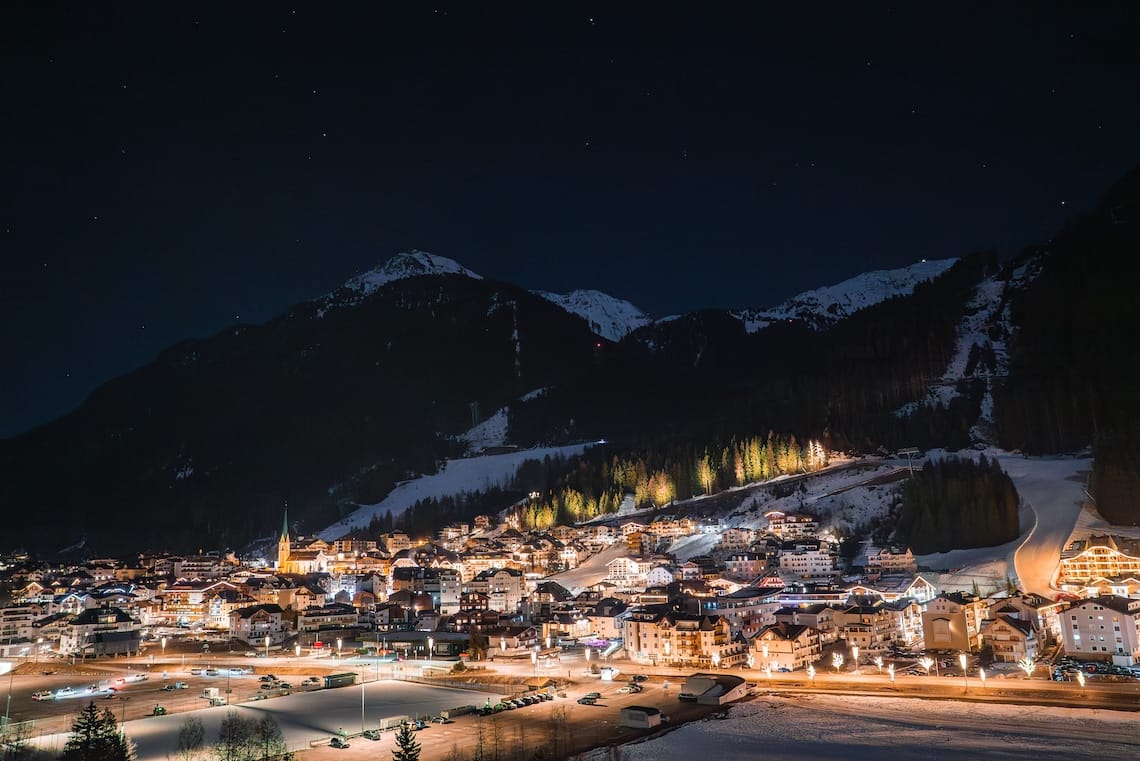
St Anton feels more like a traditional Austrian mountain town. Its compact, walkable centre mixes historic buildings, hotels, shops and bars, while the railway station makes it feel like a lived-in Alpine settlement rather than an isolated ski complex. Nasserein is quieter, whereas the centre around the Galzigbahn is better for restaurants and nightlife.
Ischgl is smart, compact and increasingly luxurious. Underground moving walkways connect parts of the village with the main gondolas, reducing the amount of time spent walking in ski boots. They’re practical, but together with the large hotels and entertainment venues they contribute to a more upmarket atmosphere.
Atmosphere winner: St Anton
Which is better for food?
Of the two, St Anton has the broader, more traditional-feeling restaurant scene. Michelin-starred Alpin Gourmet Stube in St Jakob is a strong special-occasion choice, while Galzig Bistrobar near the main lifts works for a more relaxed meal. On the mountain, Verwallstube at the top of the Galzigbahn provides refined table-service dining; Hospiz Alm in St Christoph is another memorable lunch stop if you’re skiing towards Zürs and Lech.
Ischgl has more high-end dining than its party reputation suggests. Stüva at Hotel Yscla is its standout gourmet restaurant, while Kitzloch covers traditional food in a livelier, less formal setting. For lunch, Alpenhaus at Idalp is a lovely option, whereas Paznauner Taja offers a more energetic mountain-hut atmosphere.
Food result: Draw
Which is cheaper?
Neither resort is particularly cheap. For winter 2026/27, a six-day adult Ski Arlberg pass at €457 and the Silvretta pass for Ischgl–Samnaun pass costs €451, so the lift-pass difference is relatively small.
St Anton has a wider range of accommodation when Nasserein, St Jakob, Pettneu and neighbouring villages are included, where you can often find better value properties. Ischgl’s centre is dominated by higher-end hotels, although staying in Mathon or elsewhere in the Paznaun Valley can reduce accommodation costs.
Based on Iglu Ski bookings for the same month for the last couple of seasons, Ischgl is, on average, the more expensive destination, with prices roughly 10.5% higher across all property ratings and board bases. However, while Ischgl commands a nearly 16% premium for 4-star Bed & Breakfasts, St Anton is actually the pricier option for half-board properties and 3-star B&Bs, at least for the dates we reviewed. The lesson is that you can find the best deals by comparing multiple properties and board types.
Value result: Draw
Which is easier to reach?
St Anton has a railway station in the centre, with direct or connecting services from Innsbruck, Zurich and other Alpine transport hubs. Innsbruck Airport is approximately 75 minutes away by road, making St Anton one of Austria’s easiest major resorts to reach without a car.
Ischgl doesn’t have a railway station. The nearest main station is Landeck-Zams, from where bus 260 continues through the Paznaun Valley. The road transfer from Innsbruck Airport normally takes around 90 minutes.
Access winner: St Anton
Which is better for non-skiers?
St Anton has an attractive centre, winter walking and the Arlberg WellCom complex for swimming and wellness. Non-skiers can also ride the Galzig and Valluga cable cars for mountain views or take the Nassereinbahn to Gampen, although much of the resort’s identity still revolves around skiing and après. Our guide to the top things to do in St Anton covers more alternatives.
Ischgl offers the stronger dedicated leisure facility at Silvretta Therme, with indoor and outdoor pools, saunas and an ice rink. Its cleared winter walking routes include the 2.5km climb from the Therme towards Mutta, while night tobogganing, curling and pedestrian gondola access provide further options.
Non-skier winner: Ischgl
St Anton or Ischgl: the final verdict
- Best for beginners: Ischgl
- Best for intermediates: Ischgl
- Best for advanced skiers: St Anton
- Best for piste reliability: Ischgl
- Best for natural snow and powder: St Anton
- Best for ski-area convenience: Ischgl
- Best for families: Ischgl
- Best for après-ski: Draw
- Best for resort atmosphere: St Anton
- Best for food: Draw
- Best for value: Draw
- Easiest to reach: St Anton
- Best for non-skiers: Ischgl
Choose Ischgl if you're a group of intermediates who want to ski together all day without constantly negotiating difficult routes or slow connections. St Anton is the best choice for confident skiers, particularly if you're up for challenging terrain and guided off-piste days. For après, the difference is style rather than quality: St Anton provides the classic ski-down-from-the-party experience, while Ischgl is slicker and better suited to groups planning to stay out late.
Still choosing between St Anton and Ischgl? Give our ski specialists a call. We’ll help you compare accommodation locations, travel options and skiing to find the right Austrian ski holiday for your group.