


 Favourites
 Customer portal


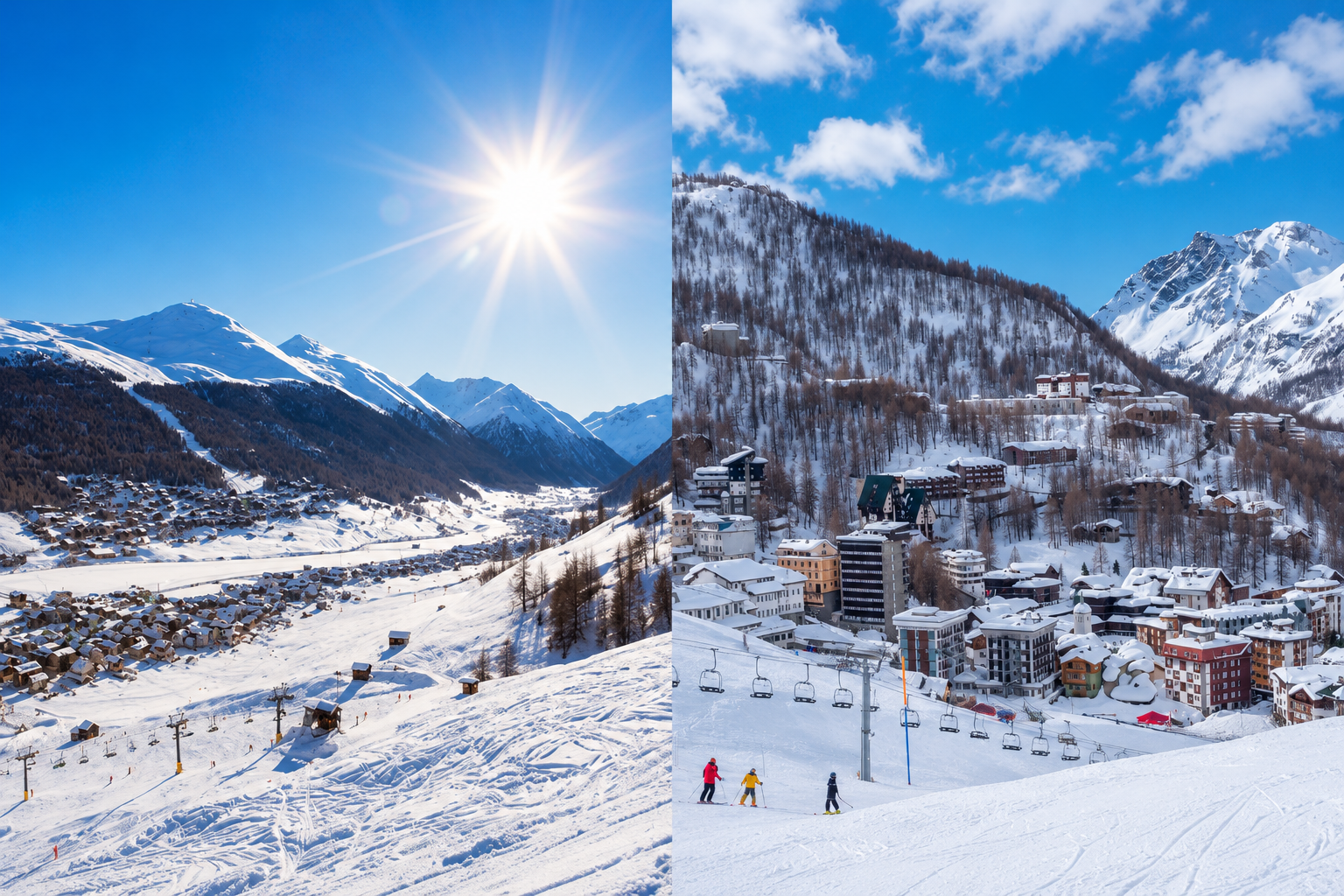
Livigno and Cervinia are both high-altitude Italian ski resorts that offer accessible skiing, good restaurants and accommodation for families and groups. Beyond those similarities, though, they promise quite different weeks on the mountain.
But which should you choose?
Cervinia’s advantage lies in its long, varied pistes, relatively short transfer from Turin and links to Switzerland’s Zermatt. Livigno combines varied skiing with duty-free shopping and one of Italy’s liveliest après-ski scenes, making it a good option for groups.
Here, you can discover how these two Italian resorts compare on terrain, value, après-ski, snow reliability and more.
Livigno vs Cervinia at a glance
| Key factor | Livigno | Cervinia |
|---|---|---|
| Best for | First-time skiers, après and activities | Long intermediate runs, altitude and linked skiing |
| Ski area | 115km across two sides of the valley, connected by bus | Around 160km with Valtournenche, up to 360km with Zermatt |
| Main resort altitude | 1,816m | 2,050m |
| Highest local skiing | Around 2,900m | Around 3,480m at Plateau Rosà |
| Beginners | Convenient village learning areas and good progression | Good nursery areas and extensive cruising once confident |
| Intermediates | Varied blues and reds on both mountains | More linked terrain and longer descents |
| Advanced skiers | More black-piste kilometres locally | Local steeps, with more options across in Zermatt |
| Snow reliability | Strong winter conditions and a high village | Higher skiing and an earlier planned opening |
| Families | Particularly good for learning and non-ski activities | Good for families who want to explore together on pistes |
| Getting around | A long village served by free buses | More compact centre, some accommodation is uphill |
| Après-ski | Livelier overall, with more late-night options | Good afternoon après and village bars |
| Restaurants | Good everyday dining and special-occasion options | Strong village dining and memorable mountain lunches |
| Non-skiers | Shopping, Aquagranda and winter walks | Mountain views, village cafés and snow activities |
| Relative cost | ££ | ££ |
| Airport access | Around 3h from Innsbruck | Around 75 mins to 2h hours from Turin |
Ski-area totals depend on the source and the pass you buy. Livigno’s two mountains share a pass but are not connected by pistes. Cervinia’s international pass costs more than its Italian-area pass.
The quick verdict
Choose Livigno if: You want convenient learning slopes, plenty of bars and restaurants, and enough activities to keep non-skiers and children entertained.
Choose Cervinia if: You want long runs beneath the Matterhorn, a larger linked ski area and a more affordable base for exploring Zermatt.
How do the ski areas compare?
Cervinia wins for the size of its linked ski area, which includes Valtournenche on the Italian side and Zermatt over the Swiss border – together the resorts are known as the Matterhorn Ski Paradise. As long as poor conditions haven’t closed the high altitude crossing, you can take a lift up and ski down into Switzerland. The area as a whole offers skiing for all abilities, with Cervinia particularly good for long, cruisey runs.
Livigno has 115km of pistes divided between Carosello 3000/Sitas and Mottolino. Both sides have enough skiing to occupy a substantial part of your week, but to change mountains you have to go through the village. The Ski Link shuttle connects lift bases on opposite sides.
Cervinia is the better choice if you want to keep moving through different sectors on skis. In Livigno, you’ll usually plan your day around one side of the valley.
Winner: Cervinia
Piste kilometres by colour
| Piste colour | Livigno | Cervinia only | Cervinia + Valtournenche |
|---|---|---|---|
| Blue | 32km | 22km | 39km |
| Red | 63km | 72km | 107km |
| Black | 20km | 9km | 12km |
| Total | 115km | 103km | 158km* |
Percentage of piste kilometres
| Piste colour | Livigno | Cervinia only | Cervinia + Valtournenche |
|---|---|---|---|
| Blue | 27.8% | 21.4% | 24.7% |
| Red | 54.8% | 69.9% | 67.7% |
| Black | 17.4% | 8.7% | 7.6% |
Which is better for beginners?
Livigno narrowly wins for beginners. The village learning areas, such as San Rocco, are a great place to start and easy to reach from your accommodation, while Bellavista on the Sitas side offers a blue for progression. Mottolino also has the Easy Lift learning area above 2,300m, reached by gondola, followed by approachable skiing around the Yepi Lift.
Cervinia is also a welcoming place for beginners, but it really shines once you’re ready to explore more of the mountain. Start around Campetto beside the village or the Vieille lift at Plan Maison, then progress onto the blues nearby. The blue number 5 returns towards the village, although its lower sections can become busy. Take the lift down if your instructor advises against skiing back.
Livigno is particularly convenient for the first few days, whereas Cervinia rewards you as your confidence grows. Read more in our guide to the best Italian resorts for beginners and Cervinia beginner’s guide.
Winner: Livigno for first-timers, Cervinia for improving beginners
Which is better for intermediates?
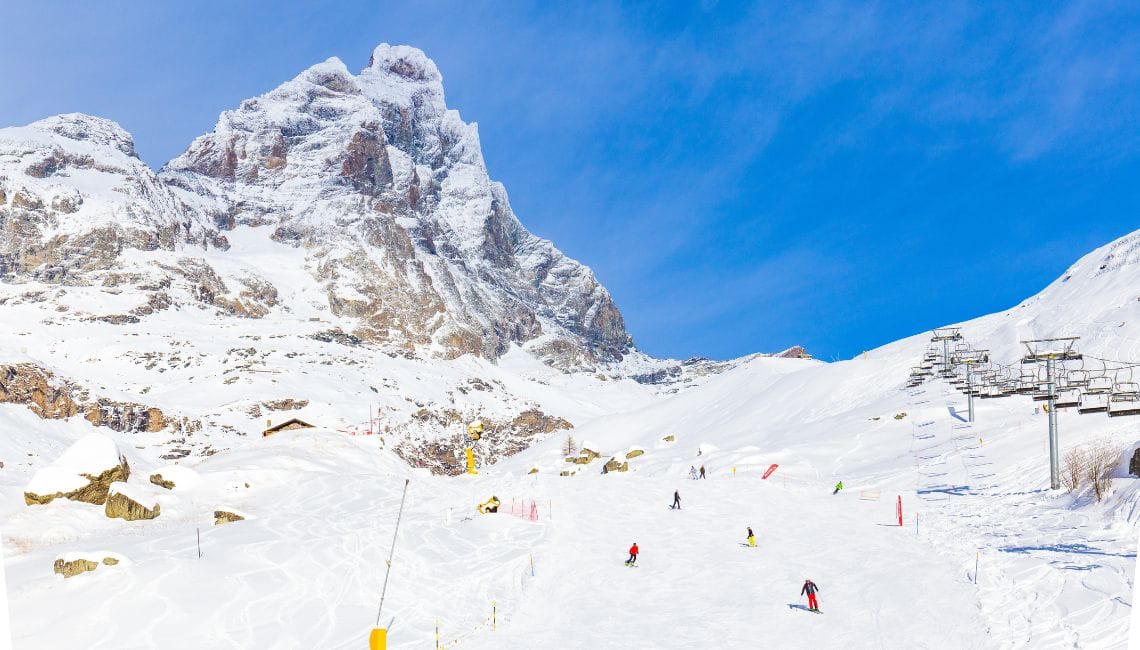
Cervinia wins for long, linked intermediate-level runs. The standout is Ventina, an approximately 11km red descending from Plateau Rosà to Cervinia. Its length and changing conditions make it a proper challenge, even though much of the gradient is manageable for confident intermediates. You can find more long red runs in Valtournenche, while stronger skiers shouldn’t miss the chance to explore Zermatt’s long, wide reds.
Livigno also has some decent intermediate terrain. At Carosello 3000, the Centrale red drops more than 3km towards the village, combining open upper slopes with a wooded lower section. Federia is a wide, north-facing red with a steady pitch, making it a good place to work on consistent turns. The skiing is more technical compared, though Cervinia’s long descents and magnificent views are hard to beat.
Winner: Cervinia
Which is better for advanced skiers?
Livigno’s larger share of advanced-level pistes gives experienced skiers more local choice than Cervinia’s Italian area. Zuelli at Carosello 3000 has a notoriously steep final section that approaches gradients of 50%, while Monte Neve–Valfin on the Mottolino side is another demanding descent. There’s also off-piste around Carosello and Mottolino.
Cervinia still has challenging terrain around Pancheron and Cielo Alto, and excellent opportunities for heli-skiing and freeriding. With an international pass, you can discover Zermatt, widely regarded as one of the best resorts in the Alps for expert skiers. Highlights include its yellow itinerary runs, such as Triftji and Stockhorn, which are marked, ungroomed, avalanche-controlled routes. On-piste, try the Obere National (piste 8) and Downhill (piste 13) from Rothorn for steep, demanding descents.
Always use a qualified mountain guide and take the appropriate avalanche equipment if you plan to go off-piste.
Winner: Livigno for local terrain, Cervinia if you include Zermatt
Which is better for freestyle?
Livigno gets our vote for freestyle. The Beach at Carosello 3000 is an approachable snowpark beside the Baby chairlift, with features designed for practising and building confidence. Cervinia has Indian Park, which has fun features for all abilities, including jumps and rails of all sizes.
Winner: Livigno
Which is more snow-sure?
Cervinia wins on altitude and a longer planned season. The village sits at 2,050m, with skiing reaching around 3,480m on the Italian side and higher terrain accessible through Zermatt. For 2026/27, Cervinia plans to open from 24 October to 2 May, if conditions allow.
Livigno is dependable too. Its village is high at 1,816m, its upper slopes approach 2,900m, and north-facing terrain such as Federia helps preserve snow. Carosello 3000’s planned season runs from 28 November to 2 May, so Livigno remains a strong option for an early or late season trip.
Cervinia offers more high-altitude skiing, although its exposed upper lifts and international links can be affected by wind. Extra altitude doesn’t guarantee that every sector will open every day.
Winner: Cervinia
Which is better for families?
For us, Livigno narrowly wins for the combination of learning slopes and activities. The San Rocco area is a good base if the kids are absolute beginners, thanks to its nearby nursery skiing, while the centre could be better if you prioritise access to shops and restaurants. Aquagranda’s Slide&Fun pools, slides and children’s areas are on hand to offer a substantial afternoon of fun if you fancy a break from the slopes.
Cervinia could be a more practical choice if you value a shorter transfer, or your children are more confident skiers. Stay near Cretaz for learning slopes and the Snow & Ice Park, which has skating and snow-play activities. The compact centre also helps when heading out for dinner.
Livigno offers more variety away from skiing, while Cervinia combines a shorter journey from Turin with excellent progression on the mountain.
Winner: Livigno for family activities, Cervinia for a shorter transfer
Where should you stay, and how easy is it to get around?
Provided you choose central accommodation, Cervinia has the advantage for shorter daily journeys. Stay near Cretaz for the snow front and village amenities, or close to the main Plan Maison lifts for access up the mountain. Cielo Alto is a separate uphill base with a bus connection, so check the journey before booking.
Livigno stretches along the valley, and the address matters as much as the hotel facilities. The pedestrian centre is convenient for evenings out. San Rocco puts you close to Carosello 3000 and Stalet, while accommodation near Mottolino suits skiers spending most of their time on that side.
Free buses help connect Livigno, but not everything is within a short walk.
Winner: Cervinia
Which has better après-ski?
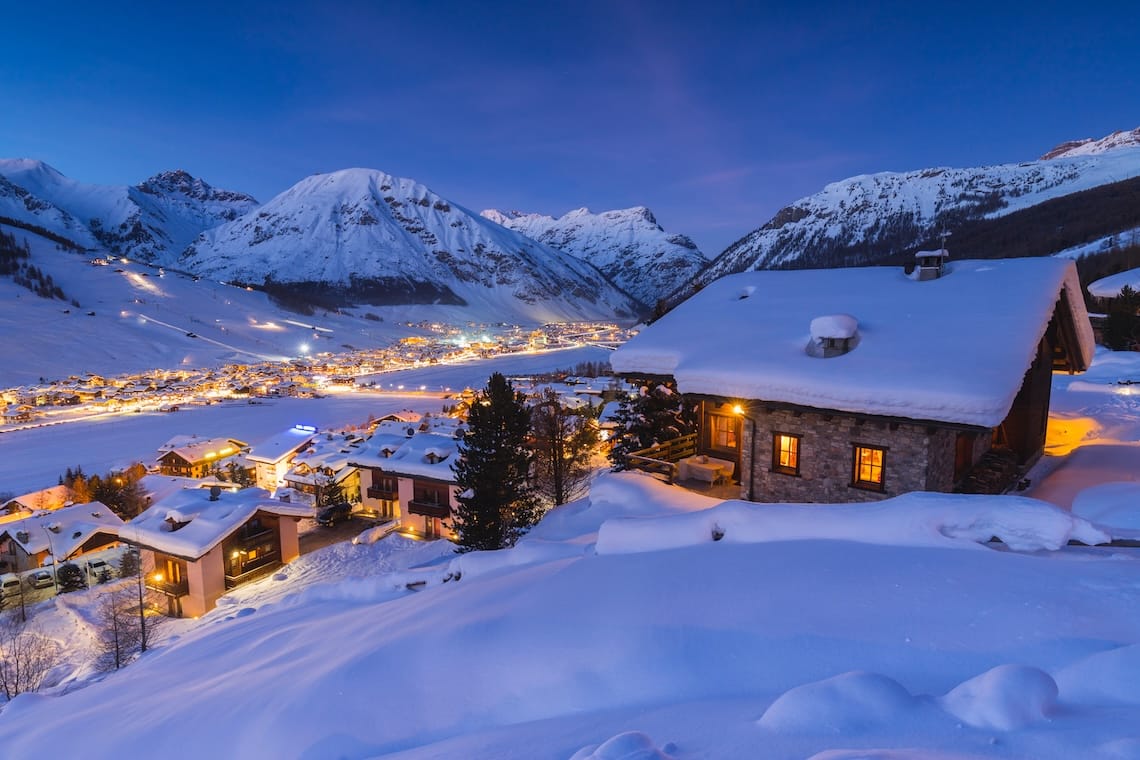
Said to have around 150 bars and clubs (one of the highest concentrations of nightlife venues of any alpine resort) Livigno should definitely be your go-to for après-ski. Stalet, at the bottom of Carosello 3000, hosts DJs and afternoon parties, while Bivio Club is an excellent venue if you want to continue later in the centre. And don’t forget to use the copper slide at Miky's Disco Club to descend into its cowprint party space.
Cervinia has good après too. LOVE is a popular slope-side stop, while village pubs such as Thistles provide an easy option after skiing. Its smaller centre makes moving between venues convenient, but Livigno has the stronger overall nightlife offering.
Our guide to Italy’s best après resorts and Cervinia nightlife guide have more suggestions.
Winner: Livigno
Which has better restaurants?
Both are good enough that we wouldn’t choose between them on food alone.
In Livigno, Al Peršéf at Hotel Sporting is a fine evening out, with a small dining room and tasting menus that combine Alpine ingredients with Asian influences. Bivio Bistrot is a more informal central choice for Italian and local dishes.
Cervinia has Wood, a restaurant with one Michelin star that draws on Italian, Swedish and Asian influences. Ymeletrob serves regional dishes and grilled meats, and is a great option for a more relaxed dinner.
We also love Chalet Etoile for lunch on the Cervinia slopes. The restaurant at Plan Maison is a good reason to book a longer lunch break into your skiing day.
Winner: Draw
Which is better for non-skiers?
Livigno would be our preference if you want to spend several days off the slopes. Its pedestrian shopping streets, cafés and Aquagranda provide more variety for a full week. The wellness facilities are particularly inviting if the weather rules out outdoor activities.
Cervinia has spectacular mountain surroundings and enough for relaxed days involving cafés, skating and sightseeing. Pedestrian lift trips towards Plateau Rosà are another option when conditions allow. Its smaller village is convenient, but there is less to do for a whole week without skiing.
Choose central Livigno accommodation if you’re a non-skier who wants to head out independently while everyone else is on the mountain.
Winner: Livigno
Which offers better value?
Livigno gets our vote for combining good-value resort spending with plenty to do. It ranks ninth in our most affordable ski resorts in Italy guide, with an estimated weekly cost of £1,985 per person, including a seven-night half-board holiday, six-day lift pass, ski hire, lunches and drinks. With 115km of pistes, that works out at £17.26 per kilometre. These are indicative costs rather than a current package quote.
Its duty-free status adds appeal for shopping, while the choice of restaurants and lively après scene gives you plenty of options when heading out. Cervinia still offers good value, particularly if you stay on the Italian slopes: the international pass costs more, so only include Zermatt if you expect to use it.
Cervinia’s larger linked area may offer better value if exploring as many pistes as possible is your priority. But if you want enjoyable skiing, lively evenings and manageable spending away from the slopes, we’d lean towards Livigno.
Winner: Livigno
Which is easier to reach?
Cervinia wins comfortably if you fly into Turin. Allow around 1 hour 45 mins to 2 hours by road, compared with roughly 3 hours from Innsbruck to Livigno. Livigno transfers from Bergamo are around 3 hours 45 minutes, with transfers from Milan generally longer.
Those are approximate road-transfer times: shared coaches, traffic and snow can extend your journey. Check the airport and transfer included in your package, particularly for Livigno, where a cheaper flight can mean a longer travel day.
Winner: Cervinia
The verdict: Livigno or Cervinia?
- Linked ski area: Cervinia
- First-time skiers: Livigno
- Improving beginners who want to explore: Cervinia
- Intermediates: Cervinia
- Advanced: Livigno locally, Cervinia with Zermatt included
- Learning freestyle: Livigno
- Snow reliability: Cervinia
- Family activities: Livigno
- A compact central base: Cervinia
- Après-ski: Livigno
- Restaurants: Draw
- Non-skiers: Livigno
- Value: Livigno
- Access: Cervinia
We’d lean towards Cervinia if you're happiest spending full days exploring long pistes. Livigno is better if your preference is solid learner slopes, lively evenings and plenty to keep everyone entertained after skiing. With either resort, choosing the right accommodation location will make a noticeable difference to your week.
Still deciding? Speak to one of our Ski Specialists. They can help you choose the right resort and accommodation.